// Free tool · ADA parking triage

ADA Parking Lot Risk Triage Tool

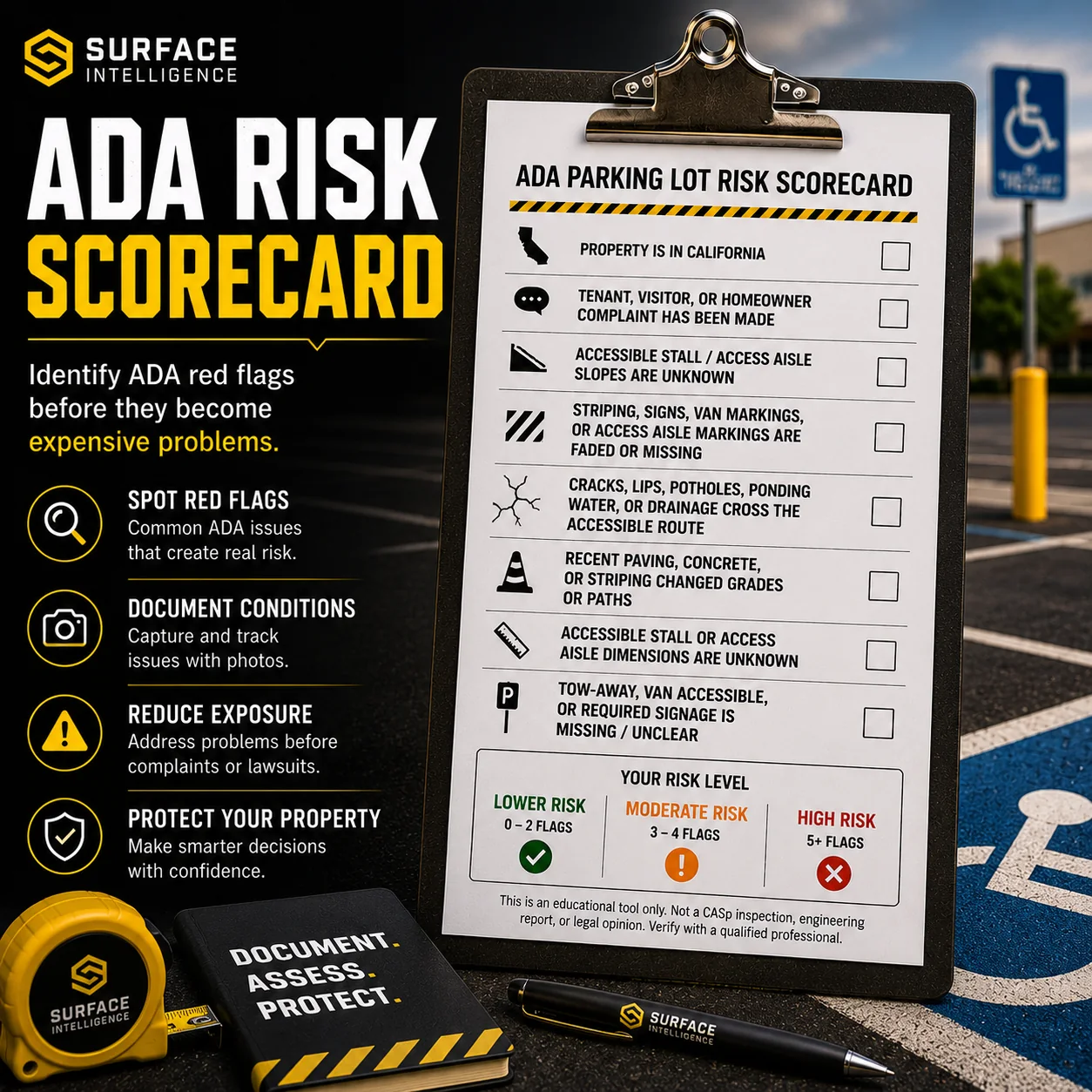
Move beyond a generic checklist. Answer a focused set of field questions and get a weighted risk readout, the top drivers behind the score, documentation priorities, contractor questions, and a printable action memo.
// Step 1

Property context

These answers shape the baseline risk. California, public access, recent alterations, and complaint history all change urgency.

// Step 2

Accessible parking inventory

Inventory issues create immediate exposure because they are visible, easy to document, and often inexpensive to check.

// Step 3

Field condition and route risk

ADA issues are not only striping. Slopes, drainage, transitions, curb ramps, and path-of-travel defects can be more serious than paint.

// Step 4

Contractor and documentation gaps

Many ADA problems become expensive because the bid is silent. This section checks whether the paper trail is strong enough before money moves.

// Keep moving

Use the result with the rest of the ADA workflow.

This triage report is most useful when it connects to documentation and scope control. These resources keep the next step practical.

The ADA Parking Lot Risk Triage Tool is a free decision aid for property managers, HOA boards, facility teams, and commercial owners. It does not certify compliance and it is not a CASp inspection, engineering report, or legal opinion. It helps identify visible parking lot and path-of-travel risk drivers, documentation gaps, and contractor questions before a complaint, demand letter, paving project, or re-stripe turns small issues into expensive scope disputes.

ADA Checklist → ADA Documentation Log → Three-Bid Decoder → ADA Risk Primer →

Does this tool replace a CASp inspection?

No. This tool is a triage aid. It helps non-experts organize visible risk factors and decide what should be documented, measured, or reviewed by a qualified professional.

Why does paving or striping change ADA risk?

Parking lot work can change slopes, transitions, accessible routes, stall layout, signage, and striping. If ADA scope is not reviewed before the work, the project can preserve or create problems that are more expensive to fix later.

What should I do with a high-risk result?

Document the current condition with dated photos, avoid approving incomplete paving or striping scope, ask the contractor to clarify ADA assumptions in writing, and consider qualified CASp or ADA review before the project proceeds.