Exactly what to say
to your board.
Most boards don't say no to projects. They say no to how they're presented.
Tell us about your project and your board's likely objection. Get a custom 3-part script (opening, math, close) + scripted counter-objections + "don't say" warnings.
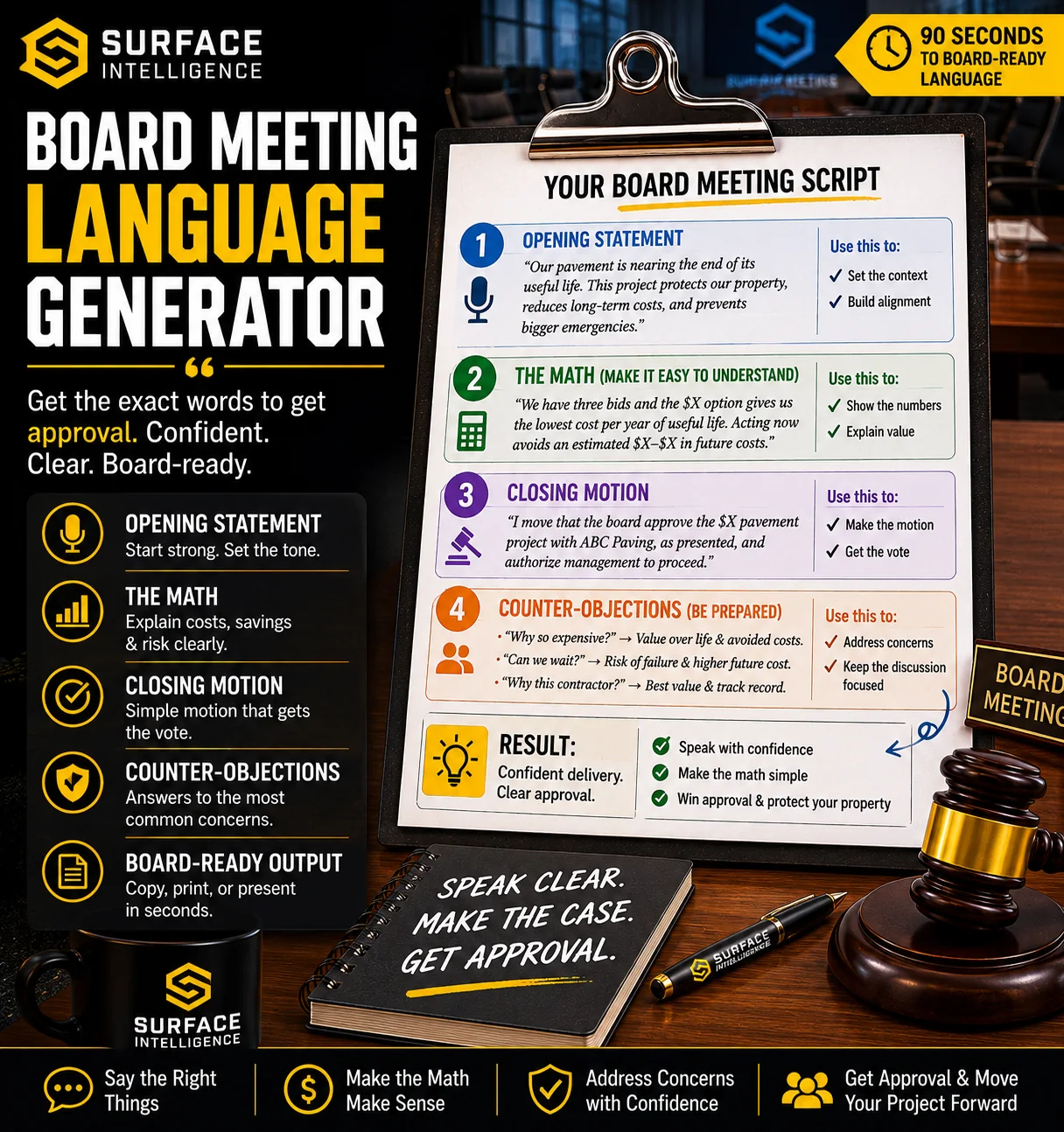
Opening
The framing that defuses the objection before they raise it.
The Math
Numbers + comparisons that resonate with their specific concern.
The Close
The language that turns a discussion into a vote.
Using the Board Language Generator
This tool turns a technical paving recommendation into language that board members, ownership groups, and non-construction stakeholders can evaluate. The goal is not to oversell a project; it is to explain the risk of waiting, the scope being recommended, the lifecycle cost, and the reason the selected approach is more defensible than a cheaper or delayed alternative. Use the generated language in board packets, manager reports, capital planning notes, and follow-up emails. Always attach the contractor proposal, photos, and bid comparison so the language is supported by documentation.
Paste the generated language into a board packet with a dated photo and the reserve or budget number. A board approves faster when the problem, the risk of waiting, and the cost are stated in plain terms rather than contractor jargon.
Board approval documentation checklist
Board members usually do not need every construction detail, but they do need the reasoning behind the recommendation. A strong pavement agenda item explains current condition, risk of deferral, scope being proposed, estimated useful life, bid comparison, reserve impact, and what happens if the board chooses to wait.
Attach photos, a simple map, contractor proposals, and any calculator output that supports the recommendation. If ADA exposure, drainage, tenant access, or safety issues are part of the decision, state them plainly. The goal is to make the motion defensible in the minutes, not to bury the board in technical language.
After approval, save the final motion language with the bid file. That record helps future boards understand why the work was approved, why a contractor was selected, and why the chosen timing made sense.
Use this page together with field photos, contractor notes, budget history, and owner or board priorities. The more complete the project file is before bids are approved, the easier it is to defend the final scope, schedule, and cost.