What should your
pavement reserve
actually be?
Pavement is usually the #2 line item in any HOA reserve study.
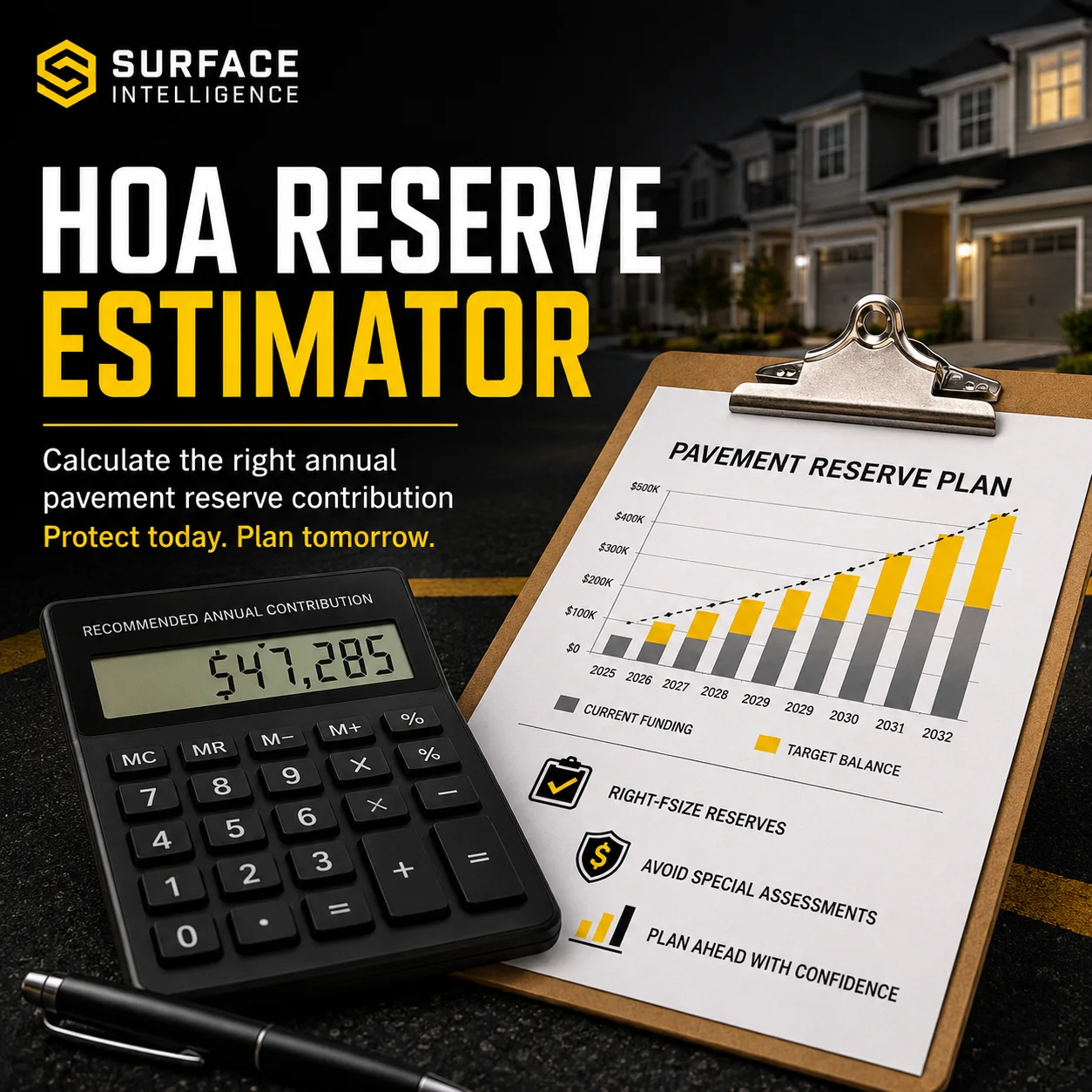
Most communities underfund it by 30-60%. Get your required annual contribution + a board-ready memo defending the number.
Reserve study required
California HOAs must complete a reserve study every 3 years.
Construction inflation
Today's cost × 1.63 in 10 years. Underfunding compounds.
Typical overlay cycle
The major capital event your reserve has to fund.
Using the HOA Reserve Estimator
HOA pavement reserves work best when boards see the parking lot as an asset with a remaining useful life, not as an emergency expense that appears every decade. This calculator gives managers a simple way to discuss annual reserve contributions, monthly owner impact, pavement condition, and timing. The output should be paired with photos, a condition rating, and a contractor budget range. If the pavement is already failing structurally, the reserve conversation should separate short-term safety repairs from long-term replacement funding so the board does not underfund both.
Record the reserve target with the lot's age, condition, and last major work so the board can revisit it each budget cycle. A reserve number tied to real pavement condition is easier to defend than a flat annual guess.
HOA reserve planning checklist
Pavement reserve planning should connect condition, timing, and owner impact. A reserve line item is easier to defend when the board can see current photos, expected remaining life, likely treatment options, and the cost difference between preventive maintenance and reconstruction. Without that context, pavement funding looks like an optional expense until failure is obvious.
Separate routine maintenance from capital replacement. Crack sealing, sealcoat, striping, and small patches may belong in an operating or maintenance budget, while overlays, major base repair, and reconstruction belong in reserves. Mixing those categories can make the association look funded while still leaving the big project short.
Use this estimator as a board discussion tool, then confirm the numbers with a reserve specialist and contractor budget range. Update the estimate after major storms, utility work, new cracking, or any project that changes the condition of the lot.
Use this page together with field photos, contractor notes, budget history, and owner or board priorities. The more complete the project file is before bids are approved, the easier it is to defend the final scope, schedule, and cost.