Should you
sealcoat now?
Most lots get sealed too often or not often enough. Both cost real money.
Tell us about your pavement and we'll tell you exactly when to sealcoat — or when to do something else first. With cost estimate, optimal weather window, and the prep work that has to happen before sealing.
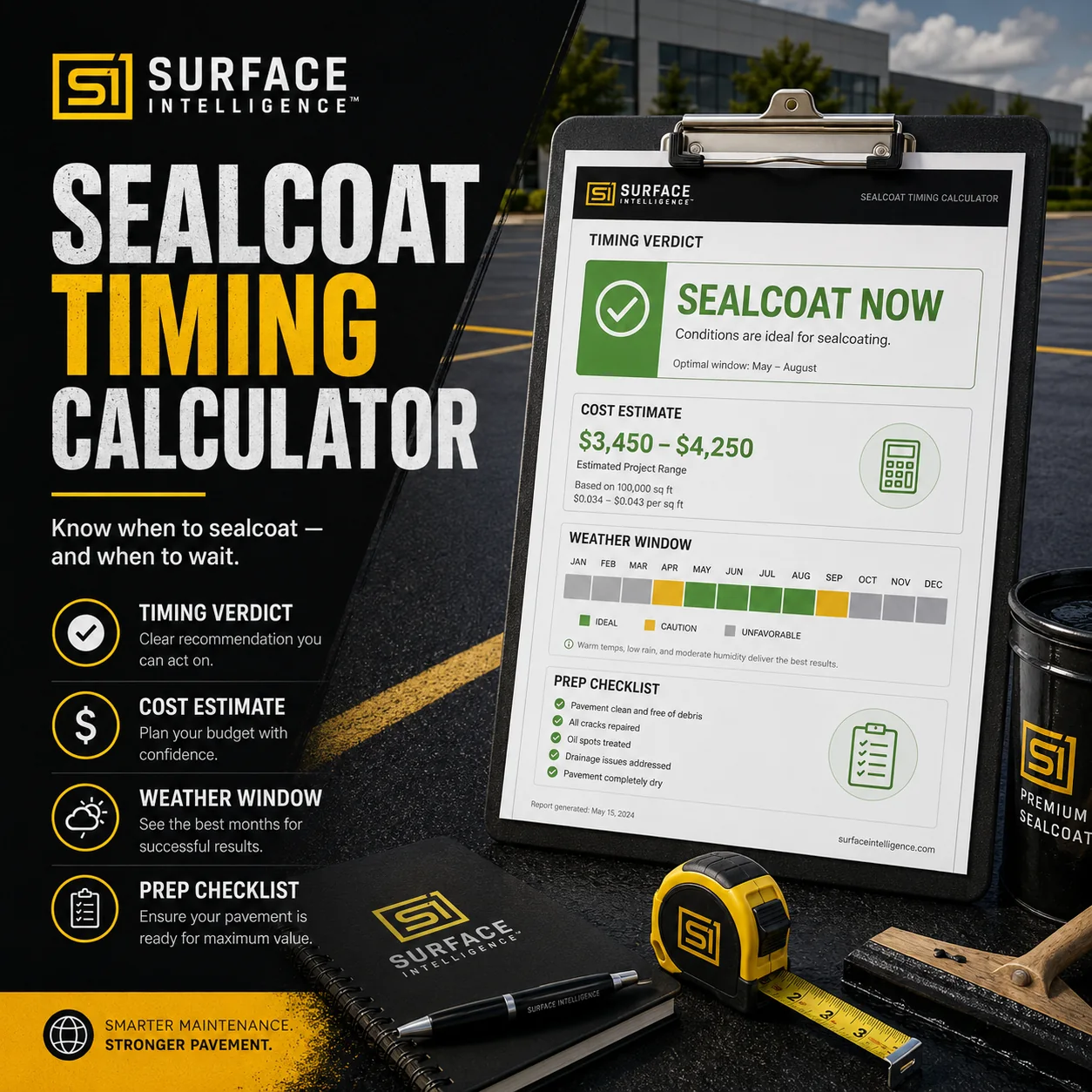
Timing Verdict
Now / soon / later — with the reasoning behind it.
Cost Estimate
Sealcoat + crack-fill + mobilization. Numbers, not vibes.
Weather Window
Optimal months for your climate zone — and when to avoid.
Using the Sealcoat Timing Calculator
Sealcoat protects asphalt only when the surface is a good candidate. It is not a structural repair, and it should not be used to hide base failure, alligator cracking, potholes, drainage problems, or unsafe transitions. This calculator helps property managers decide whether to sealcoat now, defer until weather and surface conditions improve, or repair first. Use the recommendation with field photos and a contractor walkthrough so the final scope includes crack sealing, patching, striping, and tenant access planning where needed.
Save the result with a photo of the surface and the date of the last sealcoat. Sealcoat is a timing decision as much as a cost decision, and a short record keeps the lot on a sensible cycle instead of getting sealed too early or too late.
Sealcoat decision checklist
Sealcoating works best as preservation, not rescue. Before approving a sealcoat proposal, walk the lot and mark active cracks, failed patches, potholes, ponding water, oil saturation, raveling, and areas where striping or ADA markings are no longer visible. If structural distress is widespread, sealcoat can make the surface look better while doing little to extend service life.
Timing matters as much as condition. Surface temperature, rain forecast, curing window, tenant access, irrigation overspray, sweeping, crack sealing, and striping all affect the outcome. A rushed sealcoat during poor weather can create tracking, peeling, premature wear, and complaints from tenants or residents.
Use the calculator result as a planning screen, then confirm the scope with a contractor site walk. The best proposal should state prep work, crack treatment, number of coats, material type, drying time, striping sequence, and how the property will remain accessible during the work.
Use this page together with field photos, contractor notes, budget history, and owner or board priorities. The more complete the project file is before bids are approved, the easier it is to defend the final scope, schedule, and cost.
If the lot is borderline, request two prices: one for proper crack sealing and sealcoat now, and one for targeted patching or overlay in the failed areas before coating. Comparing those scopes prevents a low sealcoat number from delaying the repair the pavement actually needs.