Cracking is one of the first items that should be reviewed during a full pavement assessment. It shows where water and movement may be changing a maintenance issue into structural repair.
A narrow crack in otherwise stable pavement may remain a preventive-maintenance item. A connected crack network with depression, loose material, standing water, or movement may be a warning that the base is already failing.
The Three Questions to Ask
- Are the cracks isolated or connected?
- Is the pavement around the cracks stable or moving?
- Is water entering or sitting around the cracks?
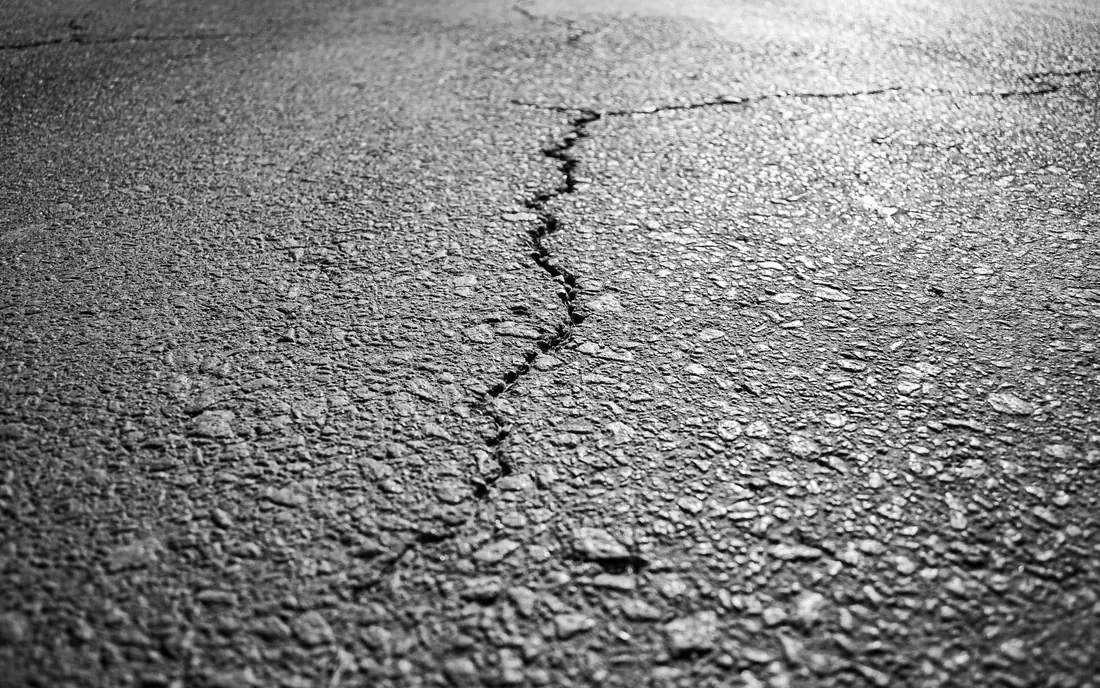
Common Asphalt Crack Patterns
Linear Cracks
Long cracks may follow a seam, drive aisle, trench, or pavement joint. They may still be sealable when the edges are clean and the surrounding pavement remains stable. Widening edges, vegetation, debris, and nearby drainage problems call for closer review.
Block Cracking
Square or rectangular patterns often indicate aging and oxidation. Preventive maintenance may slow deterioration while the blocks remain stable. Brittle surfaces and breaking edges suggest the maintenance window is closing.
Alligator Cracking
Connected, interlocking cracks often point to fatigue or base failure. If the area is depressed, loose, wet, or developing potholes, crack sealing is not a structural repair. Removal, base correction, and asphalt replacement may be required.
Edge and Reflective Cracking
Edge cracks can indicate poor support, drainage, roots, or traffic loading. Reflective cracks in an overlay show movement from the old pavement below. New asphalt does not erase unresolved movement.
When Crack Sealing Makes Sense
- Cracks are isolated
- The surrounding surface is stable
- No significant depression is present
- Loose pavement is not breaking out
- Water has not destroyed the base
- The lot remains in preventive maintenance condition
When Crack Sealing Is Too Late
- Cracks connect across large areas
- Pavement moves under traffic
- Potholes are forming
- Water pumps through the cracks
- Previous sealant failed quickly
- The area carries heavy loads
Approving a low-cost surface treatment for structural distress is not savings. It is delay with a receipt.
Document the Crack Assessment
Record the location, pattern, close and wide photos, moisture, depression, loose material, nearby drains, previous repairs, and urgency. Then ask contractors which areas are sealable, which require removal, whether base repair is included, and what will remain unresolved.