Drainage should always be reviewed during a parking lot pavement assessment, especially before overlay or sealcoat work. A dry-day inspection can miss the most important cause of failure.
Standing water is not only an appearance problem. Water enters cracks, weakens the base, accelerates potholes, damages patch edges, undermines concrete, and can create unsafe or inaccessible routes.
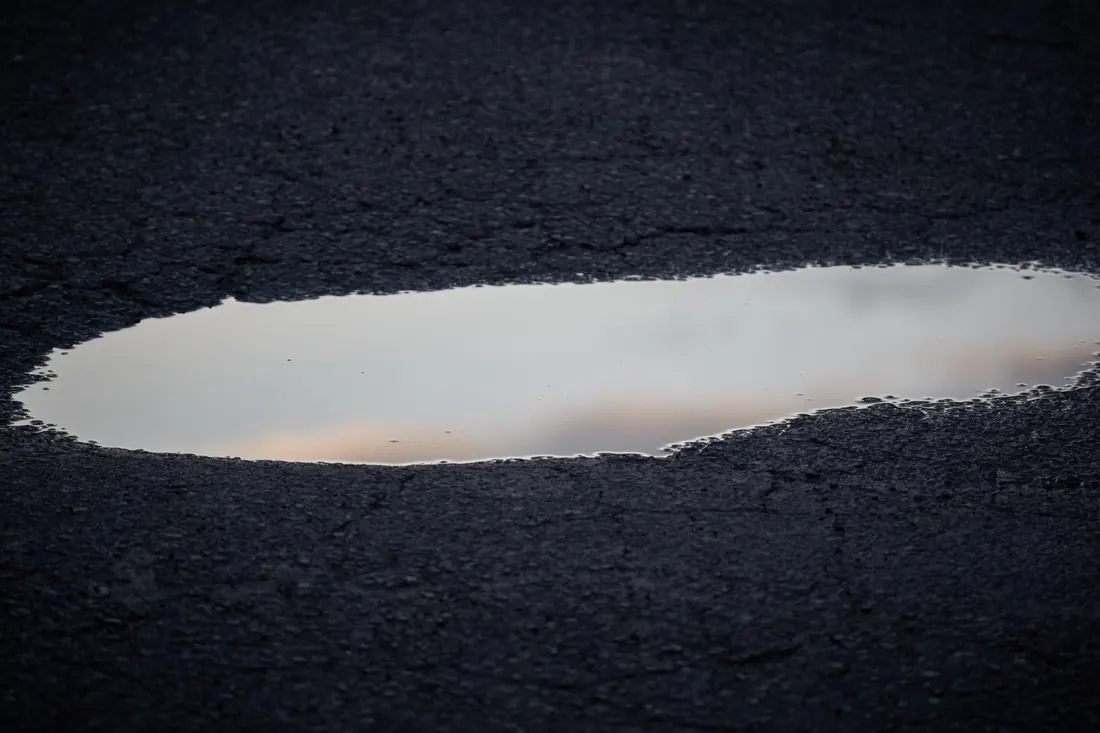
What to Look For
- Standing water and bird baths
- Low spots and depressions
- Water flowing toward buildings
- Ponding near entrances and ADA stalls
- Drain inlets sitting too high
- Settlement around drainage structures
- Water entering cracks and patches
- Erosion along pavement edges
Why Drainage Problems Become Pavement Problems
Asphalt depends on stable support. When water reaches the base, traffic can pump and displace wet material. The surface begins to crack, settle, rut, and break apart. A patch may temporarily close the hole while leaving the wet support untouched.
Water can also collect at asphalt-to-concrete transitions, around utility structures, and along curbs. These edges become recurring failure points when grading does not move water away.
Why Sealcoat and Overlay May Not Solve It
Sealcoat cannot correct grade. An overlay may improve appearance while preserving the same low spot or making an accessible stall steeper. If the water path is not understood first, the property may pay for new pavement that repeats the old failure.
What Property Managers Should Document
- Date, rainfall conditions, and how long water remained.
- Wide photos showing the drainage path and close photos of failures.
- Nearby drains, curbs, concrete, buildings, and accessible routes.
- Cracking, potholes, settlement, or repeated patches around the wet area.
- Tenant or resident complaints and prior repair history.
Questions to Ask Before Approving Work
- What caused the low area?
- Will the proposed scope change grade or only cover damage?
- Are drain adjustments and base repair included?
- Could the work redirect water toward a building or accessible route?
- What drainage issue will remain after the project?
Price the cause, not just the damaged surface.
Use the Paving Budget Estimator for early planning, then require contractors to identify drainage assumptions and exclusions in writing.