
ADA parking problems usually do not start with a lawsuit. They start when a property restripes without checking slope, sealcoats over a cracked access aisle, overlays a parking lot and changes the route to the entrance, or assumes blue paint means compliance.
ADA parking lot requirements are not just about striping. Property managers also need to understand slope, access aisles, signage, surface condition, drainage, and the path of travel.
Paint matters. But paint does not fix grade.
What ADA Parking Lot Requirements Include
A practical review should consider accessible stall count and layout, van-accessible parking, access aisles, signs and pavement markings, slope, surface stability, drainage, curb ramps, and the accessible route from parking to the entrance. Local and California requirements may add details beyond federal standards, so uncertain conditions should be reviewed by a qualified accessibility professional.
ADA Parking Stall Slope Requirements
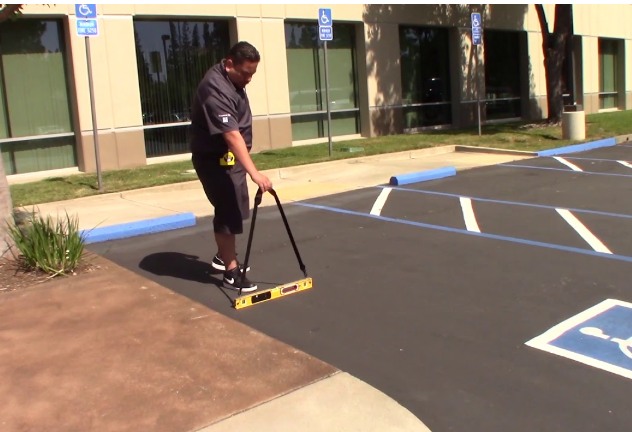
Accessible parking spaces and access aisles are generally required to have slopes no steeper than 1:48, or about 2.08%, in all directions. The surface must still drain, but drainage design cannot make the accessible parking area too steep.
- A stall can be painted correctly and still have a slope problem.
- Sealcoat and restriping do not change the underlying grade.
- An asphalt overlay can change tie-ins, cross slopes, and drainage.
- Field measurements matter when a surface appears close to the limit.
Paint Does Not Fix Slope
A parking lot can have fresh blue paint, new striping, and new signs and still create ADA risk. Paint marks the space. It does not correct the pavement.
If the asphalt or concrete beneath the accessible stall is too steep, cracked, uneven, ponding water, or sloped in a way that creates a barrier, striping does not solve the access problem.
This matters before sealcoating, restriping, asphalt overlays, mill-and-fill work, concrete replacement, ADA stall relocation, and parking layout changes.
ADA Access Aisle Requirements
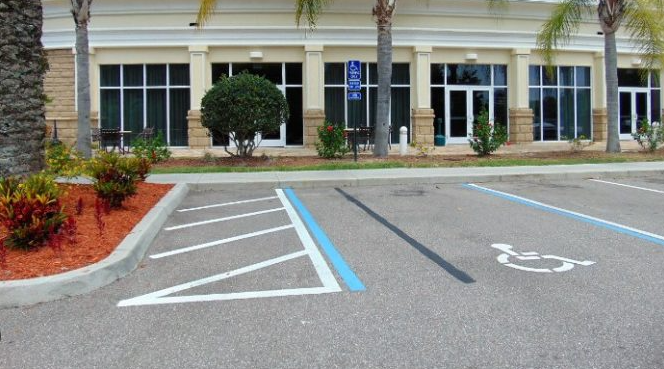
Access aisles are not extra space. They are part of the accessible parking system. An aisle needs to be usable, properly marked and sloped, connected to an accessible route, and kept clear.
Watch for wheel stops, vehicle overhang, storage, trash bins, signs, landscape edges, drainage flow, and other obstructions. The aisle should not become the low point or drainage channel for the parking area.
If the access aisle fails, the stall fails with it.
ADA Parking Signage Requirements Property Managers Should Review
- Is every accessible stall signed as required?
- Is van-accessible signage present where required?
- Can the sign be seen when a vehicle is parked?
- Is it mounted at the required height and in the correct location?
- Does the signage match the current stall layout?
- Are signs blocked by landscaping, vehicles, walls, or columns?
- Have California tow-away and other state-specific sign requirements been reviewed?
Striping gets most of the attention, but signage is often what exposes a property during a complaint.
Surface Condition Matters in ADA Parking Areas
An accessible parking area is not only a layout issue. It is also a surface issue. Review stalls, aisles, curb ramps, and routes for cracks, potholes, loose asphalt, raveling, uneven transitions, utility patches, drainage grates, broken concrete, abrupt level changes, and standing water.
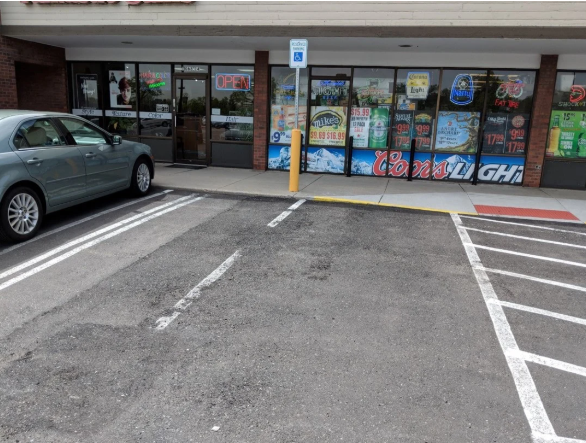
If a stall or access aisle is cracked, uneven, ponding water, or breaking apart, it may be difficult or unsafe to use even when the striping layout looks correct.
Drainage Problems in ADA Parking Areas
Accessible spaces are sometimes placed where the lot already carries drainage flow. That creates a conflict between moving water and maintaining a stable, relatively level accessible area.
- Water flowing through an access aisle
- Ponding inside an accessible stall
- Drain structures located within accessible spaces
- Settlement around drains and utility structures
- Recurring slippery buildup
- Asphalt deterioration caused by standing water
- Cross-slope concerns created by drainage design
A drainage path is not an accessible route.
ADA Mistakes Before Sealcoat, Overlay, or Restriping
Routine pavement work can preserve an existing issue or create a new one when accessible conditions are not reviewed before construction.
- Restriping existing ADA stalls without checking slope
- Sealcoating over cracked or uneven access aisles
- Overlaying asphalt without reviewing tie-in elevations
- Raising asphalt against concrete walks and curb ramps
- Creating lips or abrupt transitions along the accessible route
- Repainting stalls in the same questionable location
- Ignoring drainage before laying out new stalls
- Assuming a paving or striping contractor is performing an ADA compliance review
What Property Managers Should Document
- Date the condition was observed
- Wide and close photos of the stall, aisle, signs, and route
- Whether a complaint or accommodation request was received
- Whether slope was measured or only visually observed
- Drainage and surface concerns
- Contractor or consultant recommendations
- Board decisions or owner direction
- Temporary corrective action and assigned next steps
- Whether a CASp review was recommended
The question is not only whether the property had an ADA issue. It is what the property knew, when it knew it, and what it did next.
ADA Parking Lot Quick Checklist
- Accessible stall is clearly marked
- Access aisle is clearly marked
- Stall and aisle appear relatively level
- No obvious ponding or drainage through the aisle
- Surface is stable and free of potholes
- No obvious abrupt changes in level
- Accessible route to the entrance is clear
- Required signs are visible and properly placed
- Van-accessible stall and signage reviewed
- “No Parking” marking reviewed where required
- Tow-away signage reviewed where applicable
- Conditions documented with photos
- CASp review considered if conditions are questionable
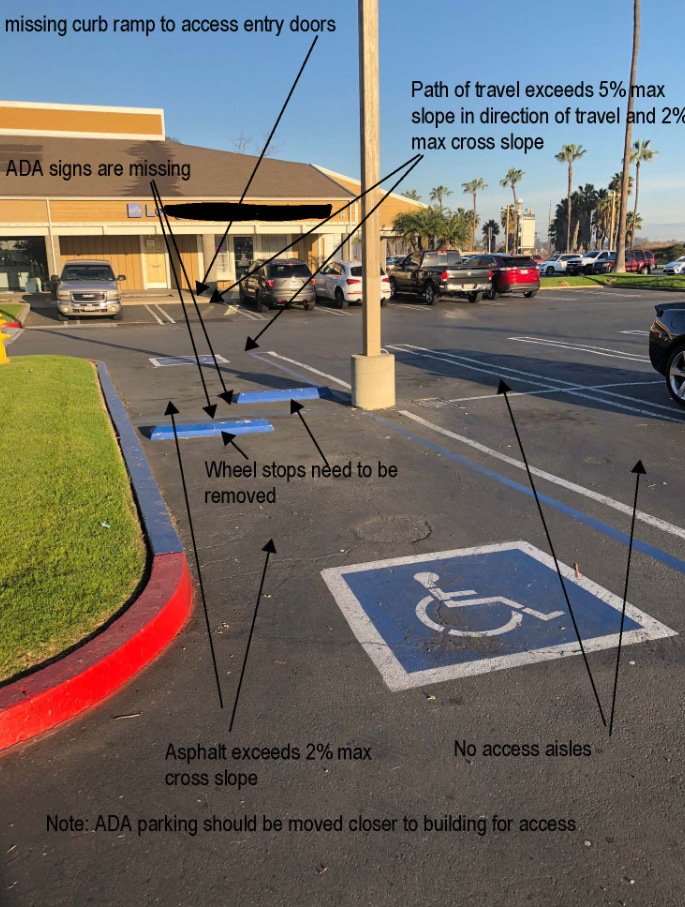
Field Photo Examples
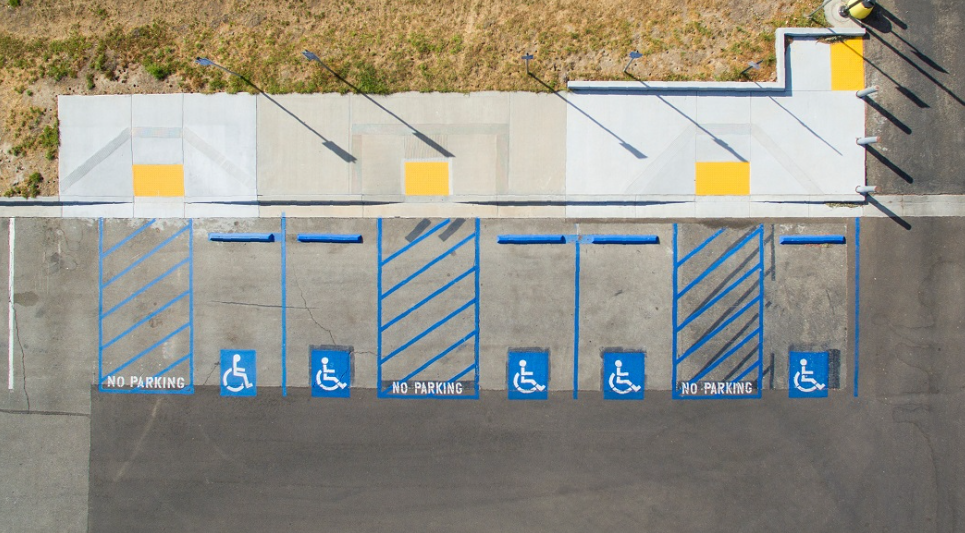
These field examples show why an accessible parking review has to look beyond the painted symbol.
When to Consider a CASp Review
A visual parking lot assessment is useful for documenting obvious concerns, but it is not the same as a formal accessibility inspection. Consider a Certified Access Specialist (CASp) or another qualified accessibility professional when measurements are close, the route or layout is complex, construction will change elevations, a complaint has been received, or the property needs a formal compliance evaluation.
Need to document a possible ADA parking issue?
Use the Surface Intelligence ADA Issue Documentation Log to record the location, photos, surface condition, signage, access route, drainage concerns, and next steps before the issue becomes a board emergency or claim.
Related Surface Intelligence Tools
Frequently Asked Questions
What are the ADA slope requirements for parking stalls?
Accessible parking stalls and access aisles are generally required to have slopes no steeper than 1:48, or about 2.08%, in all directions. Property managers should verify slope before restriping, paving, or changing accessible parking areas.
Does new striping make an ADA parking stall compliant?
No. Striping is only one part of compliance. Slope, signage, access aisle condition, the route to the entrance, surface condition, and drainage also matter.
Can sealcoat fix ADA parking slope issues?
No. Sealcoat may refresh the surface appearance, but it does not correct pavement grade or slope.
Should ADA stalls be checked before an asphalt overlay?
Yes. Overlay work can change grades, tie-ins, transitions, and drainage patterns. Accessible parking and routes should be reviewed before paving.
Is an ADA parking lot assessment the same as a CASp inspection?
No. A basic parking lot assessment can document visible concerns, while a CASp inspection is a formal accessibility review performed by a Certified Access Specialist.
Final Takeaway
ADA parking compliance is not just a striping problem. It is a field condition problem. The paint, signs, slope, surface, drainage, access aisle, and path of travel all have to work together.
For property managers, the risk is not only having a problem. The bigger risk is repainting, paving, or approving work without documenting what was already visible.
Before the paint goes down, the grade should be understood.