Before requesting bids, use this checklist as part of a larger parking lot pavement assessment. The checklist records what you see; the full assessment helps decide what those conditions mean.
A parking lot usually tells you what is wrong before it becomes expensive. The warning may be a crack near a drain, a patch that keeps breaking apart, standing water, a lifted sidewalk panel, or an accessible stall that looks fine until someone checks the surface and route.
How Often Should a Parking Lot Be Inspected?
Most commercial properties and HOAs should complete a basic visual inspection at least once a year. Inspect more frequently when the property has older asphalt, heavy truck traffic, known drainage problems, repeated patch failures, high pedestrian use, or prior ADA and trip-hazard complaints.
Complete another inspection before sealcoat, restriping, overlay work, reserve study updates, major budget meetings, board votes, and contractor bid requests.
Parking Lot Inspection Checklist
Asphalt Cracking
- Hairline and open cracks
- Longitudinal and transverse cracks
- Block and alligator cracking
- Edge and reflective cracking
- Cracks holding dirt, weeds, or water
- Connected cracks around depressions
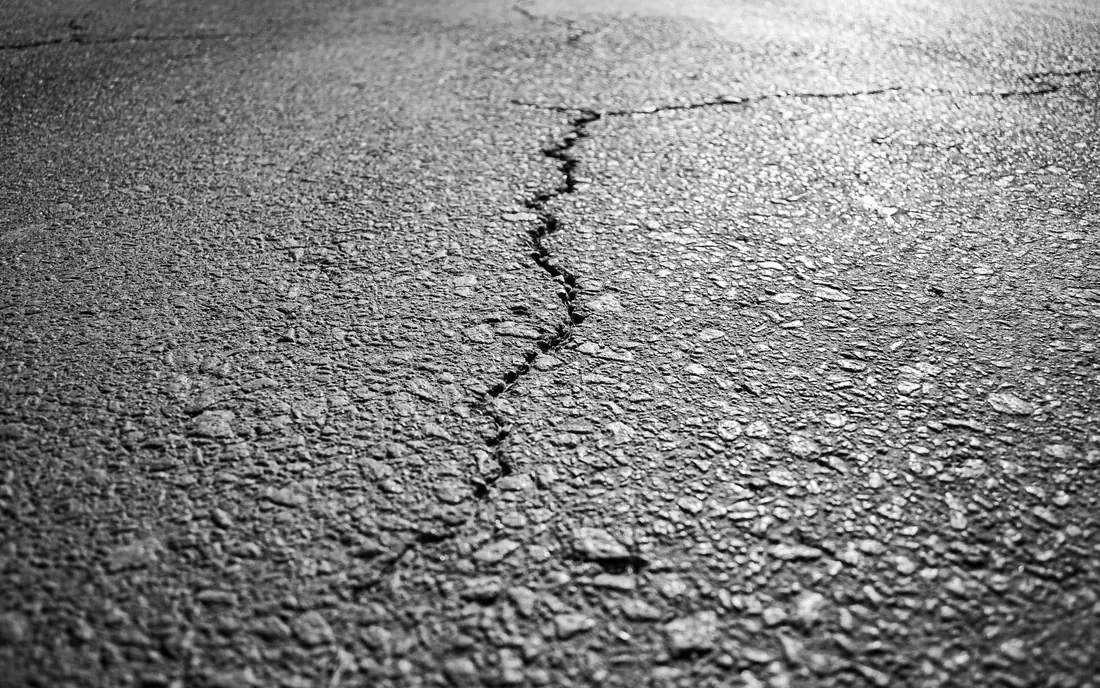
Isolated cracks may still be sealable. Connected cracking, loose pieces, depression, or water movement can indicate structural failure.
Potholes and Failed Areas
- Open potholes
- Soft or pumping pavement
- Depressions and rutting
- Broken patch edges
- Repeated repairs
- Failures near drains and turns
A pothole may require more than filling. If the support below has failed, the correct scope may require sawcutting, removal, base correction, and replacement.
Drainage
- Standing water and low spots
- Water flowing toward buildings
- Ponding near ADA stalls
- Drain inlets set too high
- Sediment trails and staining
- Erosion near pavement edges
Concrete and Trip Hazards
- Lifted sidewalk panels
- Cracked or spalled concrete
- Broken curbs and ramps
- Poor asphalt-to-concrete transitions
- Trip hazards near entrances
- Settlement around drains
ADA Parking and Accessible Routes
- Stall and access aisle condition
- Signs and pavement markings
- Surface gaps and abrupt changes
- Drainage across accessible routes
- Route from parking to entrance
- Curb ramps and truncated domes
This is not a formal CASp inspection. It is a practical documentation step. Use the ADA Issue Documentation Log when visible concerns need a dated record.
Striping, Signage, Edges, and Previous Repairs
- Faded lines, arrows, and stop bars
- Confusing traffic flow
- Fire lanes and crosswalks
- Broken pavement edges
- Failed utility cuts and overlays
- Repairs that altered drainage
Turn the Inspection Into a Decision
Group findings into immediate concerns, near-term maintenance, and capital planning. Trip hazards, active potholes, access barriers, and unsafe drainage belong in the immediate conversation. Crack sealing, minor patching, and striping may fit near-term maintenance. Large failed areas, overlays, drainage reconstruction, and major ADA corrections belong in capital planning.
Do not leave the inspection as a folder of photos.
Use the Pavement Condition Rating Tool to organize findings, then use the Paving Budget Estimator for an early planning range.