
Parking lot repair for potholes, failed asphalt, patches, and trip hazards.
Parking lot repair should do more than cover the worst spot. The repair needs to answer why the pavement failed, how far the failure extends, whether water is involved, and whether patching will actually hold.
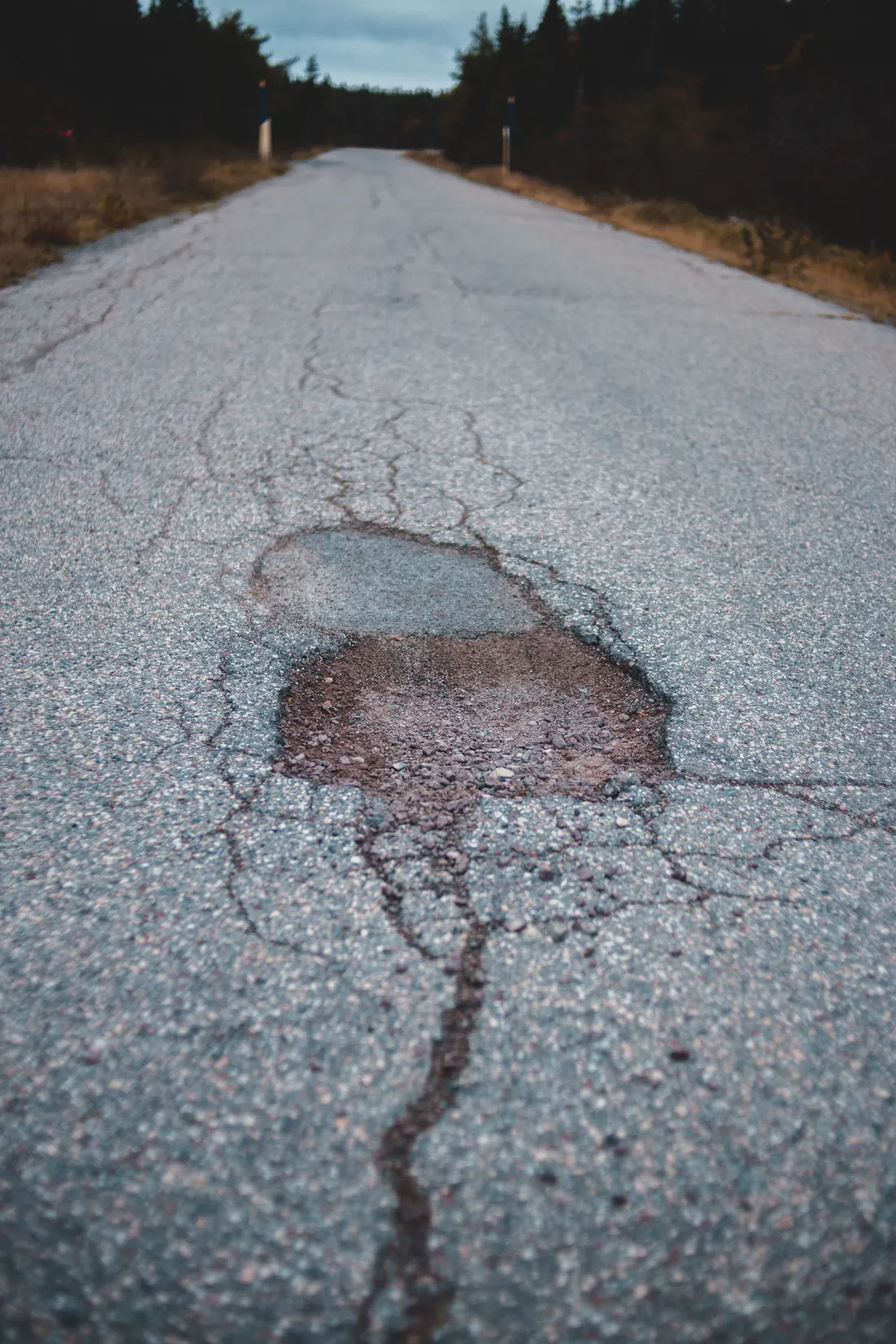
Repair starts with the cause, not the hole.
A pothole is a symptom. So is alligator cracking, settlement around a drain, a failed utility trench, or a lip at a concrete transition. If the repair scope only treats the visible defect, the property may pay for the same failure again next season.
- Potholes and raveling asphalt
- Alligator cracking and base failure
- Failed patches and utility trench cuts
- Settlement near drains, curbs, and concrete edges
- Trip hazards at asphalt-to-concrete transitions
- Water-damaged pavement and recurring low spots
Common parking lot repair options.
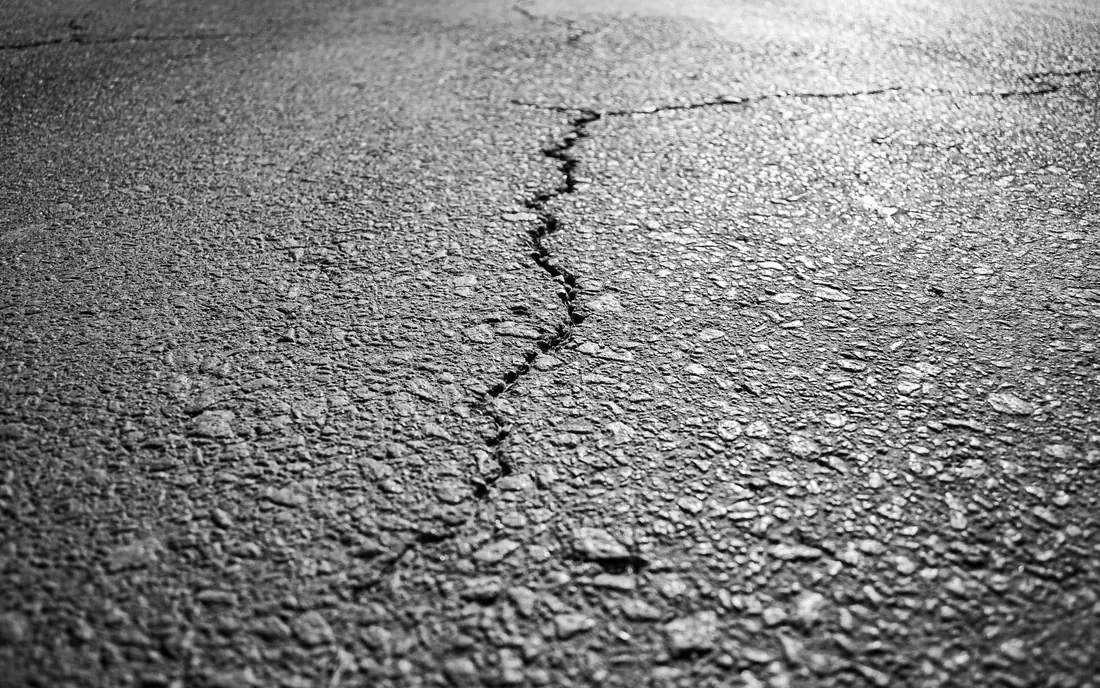
What a useful repair bid should say.
Repair bids get weak when they use vague terms like "patch bad areas" without quantities, depths, limits, or assumptions. A property manager should be able to understand what gets removed, what gets replaced, what happens if more failure is found, and what is excluded.
- Repair limits: square footage, marked locations, and whether edges will be sawcut.
- Repair depth: surface-only patch, remove-and-replace, or full-depth base correction.
- Drainage assumptions: whether water flow, low spots, or drain settlement are included.
- Traffic control: how tenants, residents, deliveries, and customers will move during repairs.
- Unit pricing: how additional failed areas will be priced if uncovered during work.
- Warranty limits: what the contractor is not responsible for if underlying movement remains.
Recent project notes to add over time.
Use this section for real repair examples as they become available. Good entries should show the failed condition, the repair method, why that method was chosen, and what the property manager learned.
Helpful tools and related pages.
Parking lot repair FAQ.
How do I know if a pothole needs base repair?
If the area is pumping, repeatedly failing, holding water, surrounded by alligator cracking, or sinking near a drain or utility cut, base repair may be needed instead of a shallow patch.
Can a parking lot be repaired in phases?
Yes. Phasing often makes sense for HOAs, apartments, retail centers, and operating properties. The key is to prioritize safety, water intrusion, tenant access, and the areas most likely to worsen.
Should I repair before sealcoating?
Usually yes. Sealcoat should not be used to hide failed asphalt. Repair failed areas, seal appropriate cracks, then coat and stripe only when the pavement is a good maintenance candidate.