
Commercial Parking Lot Striping and Restriping
Parking lot striping should make a property easier to use, easier to enforce, and easier to explain. If old lines are copied without review, fresh paint can preserve ADA issues, confusing circulation, and bad access patterns.
When Parking Lot Striping Is the Right Solution
Parking lot striping may be the right scope when pavement markings are faded, confusing, missing after sealcoat, changed by paving work, or no longer supporting the way tenants, residents, customers, deliveries, and pedestrians use the property.
Good striping is not only about white lines. It is about circulation, access, ADA markings, fire lanes, curb paint, signage coordination, and whether the layout helps people move through the site without guessing.
- Faded stalls, arrows, stop bars, or crosswalks
- Restriping after sealcoating or paving
- ADA stalls and access aisles that need review
- Fire lanes, red curbs, and no-parking markings
- Tenant, resident, or customer circulation issues
- Loading zones, reserved stalls, EV spaces, or visitor parking
- Directional arrows and drive aisle clarification
- Layout updates before owners or boards approve the scope
When Restriping Can Repeat an Expensive Mistake
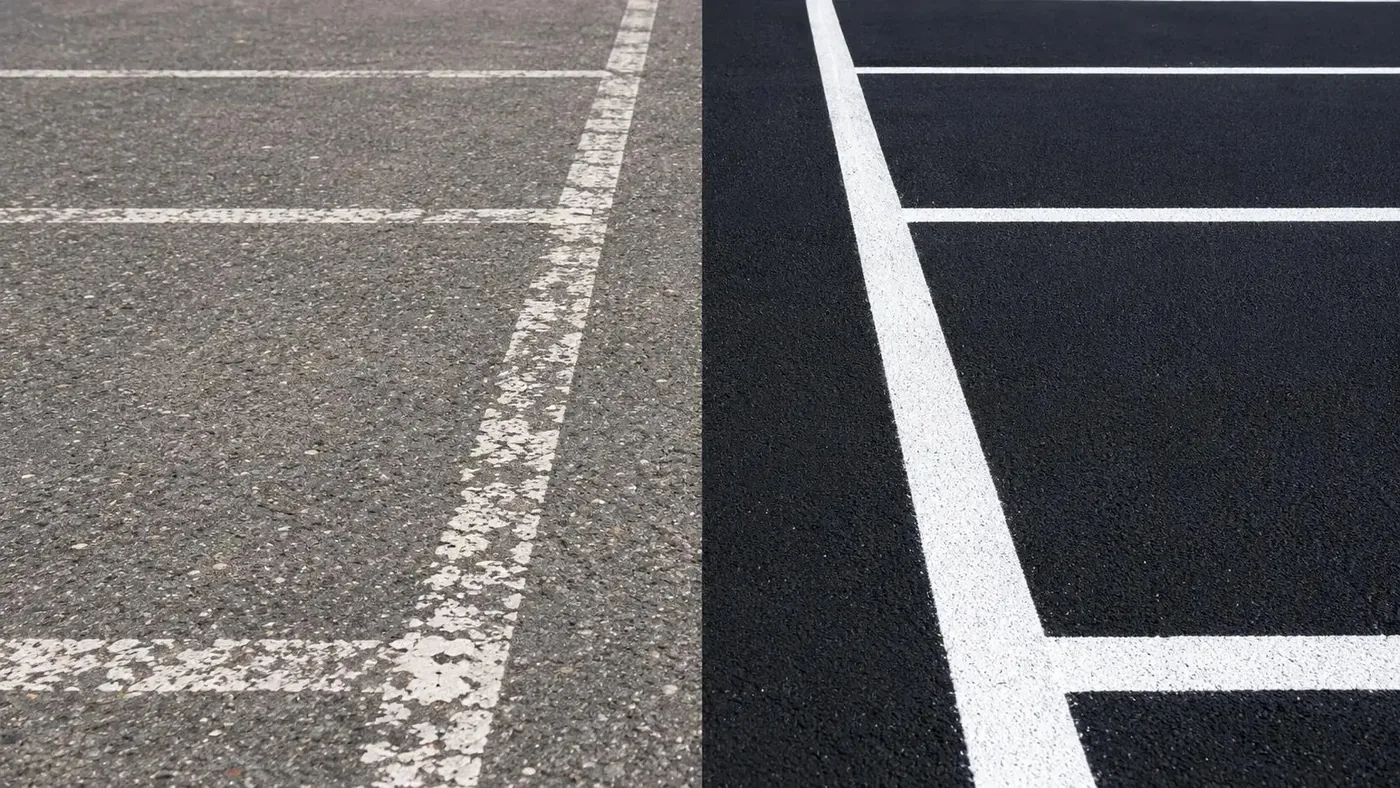
Restriping is a problem when it simply traces old markings without checking what those markings are preserving. A parking lot can have fresh paint and still have ADA risk, confusing traffic flow, poor fire lane markings, unsafe pedestrian paths, or stall layouts that no longer fit the property.
Before approving striping, separate repainting from layout review. A good scope should make clear whether the contractor is matching existing markings, modifying the layout, adding stencils, correcting fire lanes, or repainting ADA areas after a field review.
- Copying old ADA stalls without checking slope or route
- Repainting access aisles that do not connect to a usable path
- Preserving confusing arrows or one-way patterns
- Ignoring fire lane markings, curb color, or signage conflicts
- Adding stalls where turning movements do not work
- Repainting over pavement that needs repair first
- Skipping tenant, resident, or delivery access planning
- Assuming blue paint equals ADA compliance
Striping, ADA Markings, Fire Lanes, and Sealcoat
Striping often happens after sealcoating or paving, but the layout should be reviewed before the final paint goes down. Once stalls, arrows, access aisles, and fire lanes are painted back onto the lot, owners and boards often assume the layout is settled.
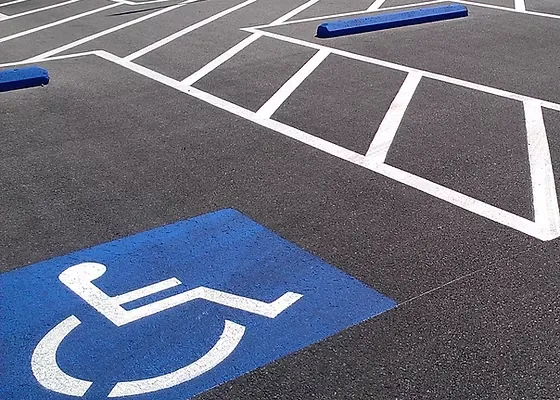
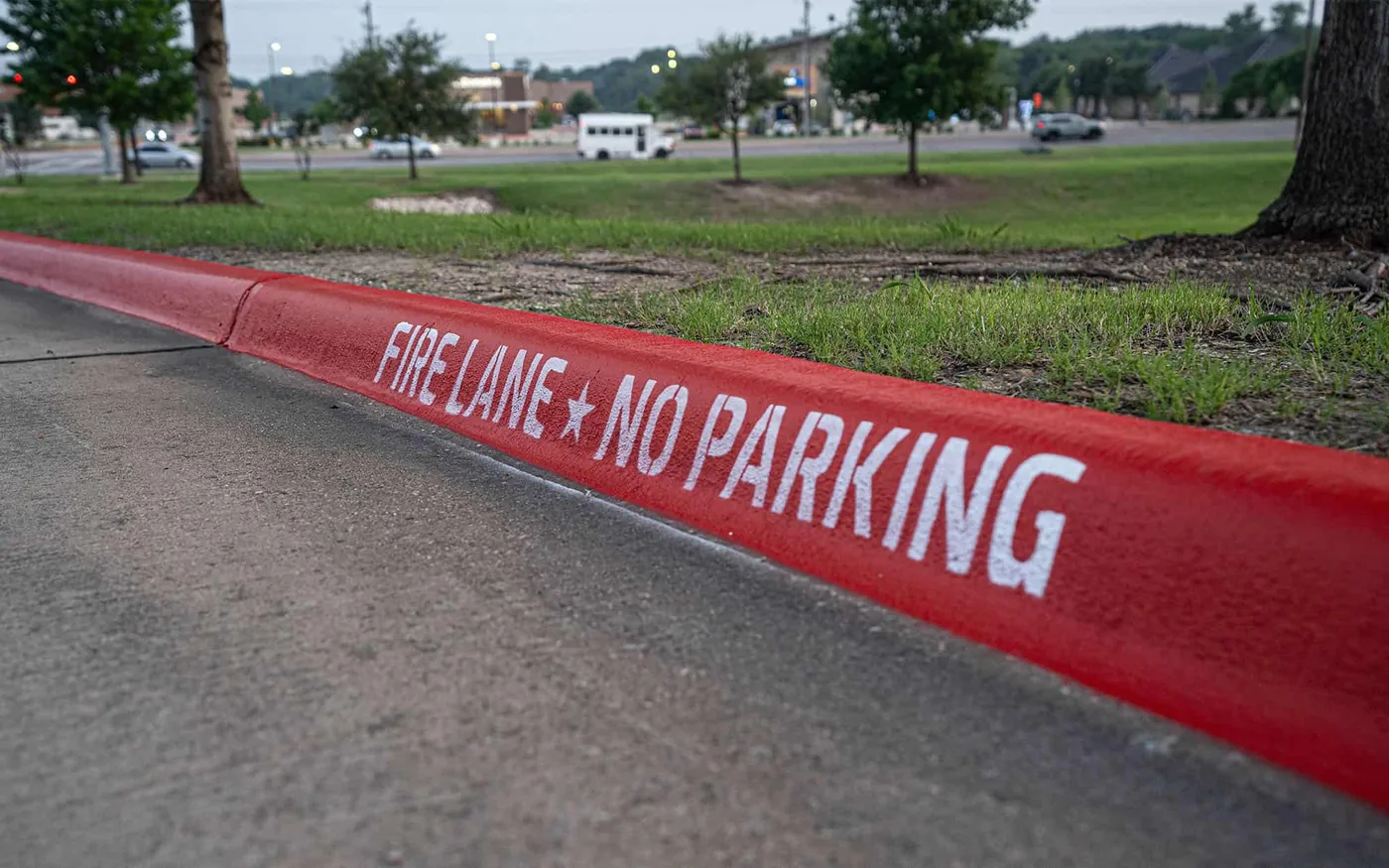
Paint does not fix slope. ADA parking still depends on surface condition, access aisle slope, stall slope, route connection, signage, curb ramps, drainage, and path of travel. Fire lane markings also need curb paint, no-parking language, and signs to work together.
What Affects Parking Lot Striping Cost?
Do not compare striping bids by total price alone. Cost depends on whether the work is a simple restripe or a layout change, number of stalls, lineal footage, ADA markings, stencils, arrows, stop bars, crosswalks, curb painting, fire lane markings, layout measurement, traffic control, phasing, mobilization, and weekend or after-hours access needs.
Before approving a parking lot striping proposal, review ADA Parking Requirements, ADA Parking Corrections, How to Read a Pavement Bid, and the Three-Bid Decoder.
Our Striping Scope Review Process
A useful striping scope should make the layout clear before work starts. The property file should show whether the crew is matching existing striping, correcting layout problems, repainting after sealcoat, or coordinating ADA and fire lane markings.
- Initial photo and layout review
Ryan reviews wide photos, faded markings, ADA areas, fire lanes, signs, site use, timing, and any bids already in hand. - Existing layout screening
The old layout is reviewed for stall count, circulation, arrows, pedestrian paths, ADA markings, and confusing areas. - ADA and access review
Accessible stalls, access aisles, signs, routes, curb ramps, slope concerns, and surface condition are separated from simple paint decisions. - Fire lane and curb review
Fire lanes, red curbs, no-parking markings, curb paint, and signs are checked before repainting. - Traffic and phasing plan
Tenant access, resident parking, deliveries, trash service, customer parking, and reopening timing are planned before paint goes down. - Layout and paint application
Stalls, lines, arrows, symbols, stencils, stop bars, crosswalks, and curb markings are applied according to the approved scope. - Drying and reopening
Access is controlled long enough for markings to dry and reopen without immediate tracking or damage. - Final notes
The property should keep notes on completed markings, changed layout areas, exclusions, and ADA or sign issues to monitor next.
What We Look at Before Recommending Restriping
A responsible striping recommendation starts with the property layout, not a paint count. Some lots only need refreshed markings. Some need layout cleanup. Some need ADA, drainage, paving, or concrete work before the lines should be painted back.
- Existing stall dimensions and drive aisle widths
- Accessible stalls and access aisles
- Signs, curb ramps, and path of travel
- Fire lanes, red curbs, and no-parking zones
- Directional arrows, stop bars, and crosswalks
- Loading zones, reserved spaces, and EV stalls
- Tenant, resident, customer, and delivery patterns
- Sealcoat or paving timing
- Surface condition where markings will be applied
- Drainage and ponding near painted areas
- Night, weekend, or phased access needs
- Areas where old striping should not be copied
Common Striping Mistakes Property Managers Should Avoid
- Copying old lines without reviewing the layout
- Assuming ADA striping means ADA compliance
- Ignoring slope before repainting accessible stalls
- Not coordinating signs with painted markings
- Forgetting fire lanes, curb paint, or no-parking language
- Leaving confusing arrows or missing stop bars
- Repainting over pavement that needs repair first
- Not planning tenant or resident access
- Approving vague stencil and layout assumptions
- Not documenting the layout before sealcoat or paving
ADA, Fire Lane, and Traffic Flow Considerations
Striping touches visible risk. Accessible spaces need more than blue paint. Fire lanes need more than red curb. Traffic flow needs more than arrows if the geometry or sight lines do not make sense. A striping scope should make these assumptions clear before paint gives everyone a false sense of completion.
Surface Intelligence ADA content is educational risk-screening only. It is not a CASp inspection, legal opinion, engineering report, or formal compliance certification. Use the ADA Parking Requirements guide and ADA Issue Documentation Log to document visible concerns before restriping.
Parking Lot Striping for HOAs, Commercial Lots, and Facilities
How Often Should a Parking Lot Be Restriped?
Timing depends on traffic, sun exposure, sealcoat history, pavement condition, tenant turnover, ADA needs, fire lane visibility, curb paint, and whether drivers can still understand the layout. A busy retail center may need attention sooner than a lightly used private lot.
Restriping by calendar alone can miss the point. The better question is whether markings are still visible, enforceable, understandable, and aligned with the current property use.
Common Field Scenarios
Bay Area and Northern California Striping Scope Help
Surface Intelligence helps commercial properties, HOAs, facilities, and property owners think through Bay Area parking lot striping and Northern California restriping decisions. That can include Oakland, Alameda, Berkeley, Richmond, Concord, Walnut Creek, Pleasanton, San Leandro, Hayward, Fremont, San Jose, and Sacramento-area commercial properties where the project fit makes sense.
The location matters, but the main question is still layout: should the property simply repaint existing lines, or should the striping scope fix visible problems before they become owner, tenant, board, or access complaints?
Related Parking Lot Striping Resources
Commercial Parking Lot Striping FAQs
Should a property always copy the old parking lot striping layout?
No. Old striping may preserve ADA issues, confusing circulation, poor stall dimensions, fire lane conflicts, or outdated tenant needs. Restriping is the moment to review the layout before paint goes back down.
Does new striping make an ADA parking stall compliant?
No. Striping is only one part of ADA parking. Slope, surface condition, access aisles, route connection, signage, drainage, and path of travel still need review. Paint does not fix slope.
When should striping happen after sealcoating?
Striping should happen after the sealcoat has cured enough for layout and paint adhesion. Timing depends on product, weather, sun, shade, humidity, traffic needs, and reopening schedule.
What should be included in a parking lot striping scope?
A useful scope should identify stall layout, ADA markings, access aisles, fire lanes, arrows, stop bars, crosswalks, loading zones, curb paint, signage coordination, traffic control, phasing, and layout changes.
Why are parking lot striping bids so different?
Bids can differ because of layout complexity, restriping after sealcoat, new layout work, ADA markings, fire lanes, curb painting, stencils, signage coordination, traffic control, phasing, and mobilization.
Can striping fix traffic flow problems?
Striping can clarify traffic flow when the layout is reviewed first. It cannot fix a bad physical layout, poor sight lines, insufficient aisle width, or access conflicts by itself.
Should fire lanes be reviewed before restriping?
Yes. Fire lane markings, curb color, no-parking language, signage, and local requirements should be reviewed before repainting.
What should I send Ryan before approving striping?
Send wide photos, faded marking photos, ADA stall photos, fire lane or curb photos, signs, the property address, sealcoat timing if relevant, and any striping bids or layout notes.
Before you restripe, decide whether the old layout deserves to come back.
Send Ryan the property address, wide photos, close photos of faded markings, ADA stalls, fire lanes, signs, timing, and any striping bids you already have. The goal is to avoid repainting a layout problem just because the old lines are still visible.