
ADA Parking Corrections and Accessible Parking Solutions
ADA parking work should solve the condition, not just repaint the symbol. Stalls, access aisles, signs, routes, slopes, asphalt, concrete, drainage, and striping all have to be scoped together before the property looks finished on paper.
When ADA Parking Corrections Are the Right Conversation
ADA parking corrections may be the right scope when accessible spaces are faded, missing, poorly located, blocked by bad transitions, affected by paving or sealcoat work, tied to a complaint, or showing visible issues with access aisles, signs, slopes, curb ramps, routes, or surface condition.
The mistake is treating ADA parking like a stencil item. A manager may approve new blue paint and still inherit the same access problem if the slope, route, sign, concrete, asphalt, or drainage issue was never reviewed.
- Accessible stalls or access aisles need restriping
- Signs are missing, confusing, low, damaged, or poorly located
- Accessible areas are affected by paving, sealcoat, or concrete work
- Access aisles do not appear to connect to a usable route
- Slope, ponding, cracking, or settlement is visible in ADA areas
- Concrete ramps, curbs, walks, truncated domes, or transitions are part of the problem
- A complaint, demand letter, or owner concern triggered a review
- Bids say "ADA by others" without explaining the actual scope
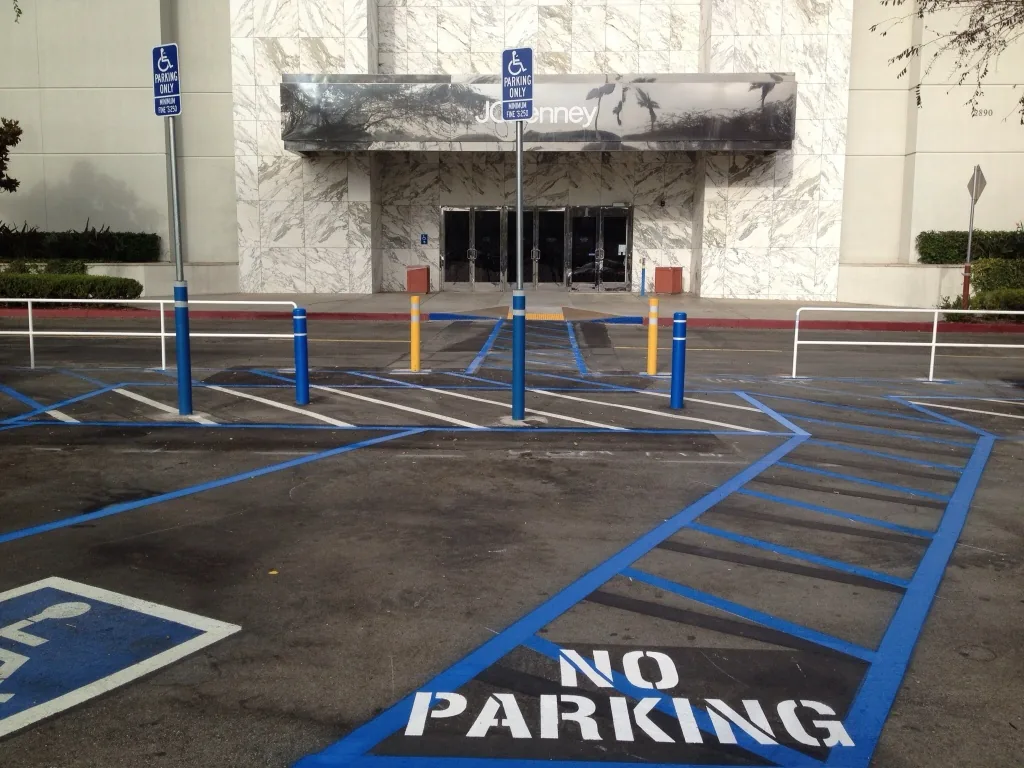
When Paint Is Not Enough
Restriping can correct visible markings, but it cannot fix grade, route, drainage, settlement, broken concrete, bad transitions, or a stall location that does not work. New paint can even make an unresolved condition look intentionally approved.
Before approving accessible parking work, separate paint decisions from field-condition decisions. The property file should show what is being repainted, what is being repaired, what is excluded, and whether a formal accessibility review is needed.
- Blue paint over an area with slope concerns
- Access aisles that do not connect to a practical route
- Signs that do not match the painted layout
- Drainage crossing or ponding in accessible areas
- Broken asphalt or concrete inside stalls or aisles
- Curb ramps, walks, or transitions that need review
- Accessible stalls placed where the route or grade does not work
- Striping bids that do not explain ADA responsibility
ADA Parking Work Can Involve More Than One Trade
Accessible parking corrections often sit between paving, concrete, striping, signage, drainage, and documentation. If those pieces are scoped separately without one field plan, the project can look finished while still leaving loose ends.
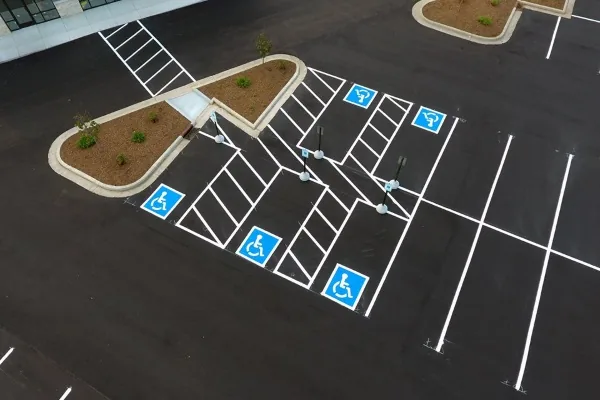
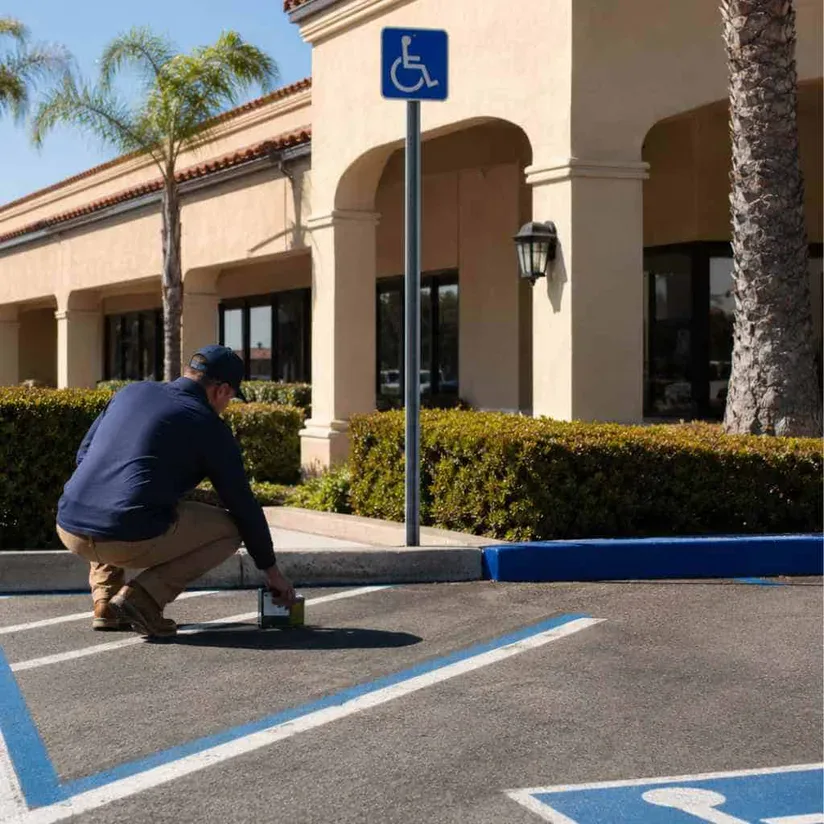
Signs, Tow-Away Notices, and Van-Accessible Stalls
Signage is not an afterthought. Accessible parking signs, van-accessible signs, post locations, stall markings, and required tow-away information at the parking-lot entrance need to work together so the property can explain and enforce the layout.
A proposal should state whether signs are included, whether posts or hardware are included, whether existing signs remain, and whether the entrance notice is part of the scope. If the bid only says "stripe ADA," the signage responsibility may still be unresolved.
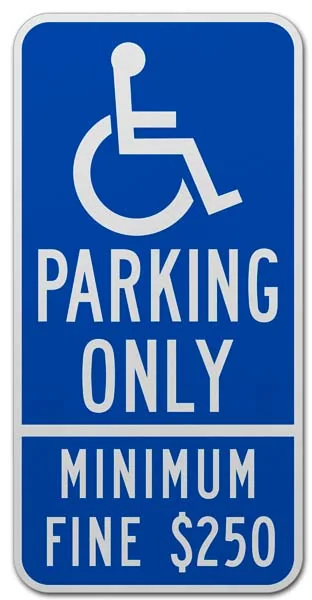 Standard accessible parking sign
The stall sign should match the layout being painted and be coordinated with the accessible space it serves.
Standard accessible parking sign
The stall sign should match the layout being painted and be coordinated with the accessible space it serves.
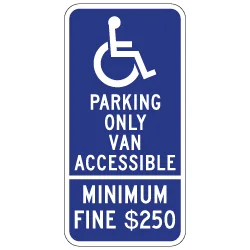 Van-accessible sign
Van-accessible stalls need the correct sign package and layout assumptions before striping is treated as complete.
Van-accessible sign
Van-accessible stalls need the correct sign package and layout assumptions before striping is treated as complete.
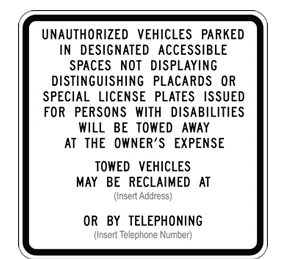 Tow-away entrance notice
The entrance notice belongs in the property-file conversation, not as a last-minute item after the lot is painted.
Tow-away entrance notice
The entrance notice belongs in the property-file conversation, not as a last-minute item after the lot is painted.
Ramps, Route Connections, and Truncated Domes
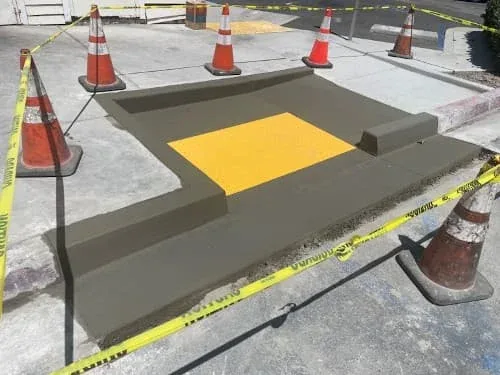
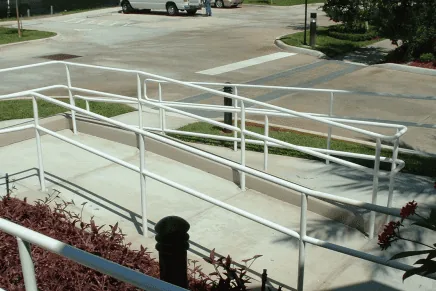
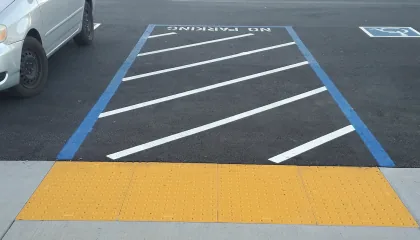
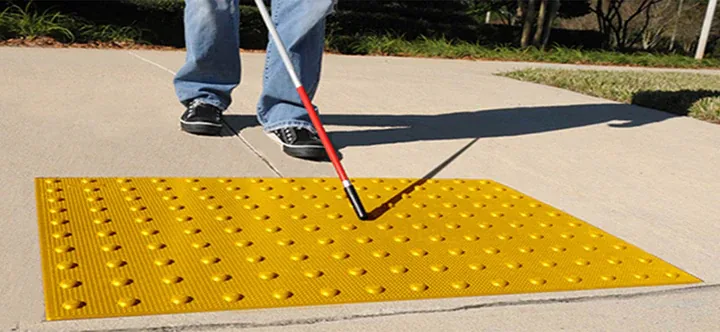
Some ADA parking corrections move beyond striping and signs. Curb ramps, accessible route connections, landings, concrete transitions, detectable warning surfaces, and truncated domes can become part of the physical correction scope when the route condition calls for it.
Ryan can help coordinate the field side of this work, including concrete, ramp, route, and truncated-dome installation where it fits the scope. Formal compliance verification remains separate when the property needs certified review.
What Affects ADA Parking Correction Cost?
Do not compare ADA parking bids by total price alone. Cost depends on whether the work is simple restriping, sign replacement, asphalt repair, concrete correction, drainage work, slope-related reconstruction, phased access, formal accessibility review, or coordination with a larger paving or sealcoat project.
Before approving the work, compare the scope with ADA Parking Requirements, the ADA Risk Scorecard, the ADA Issue Documentation Log, and How to Read a Pavement Bid.
Our ADA Parking Scope Review Process
A useful ADA parking scope should clarify the visible field condition before anyone assumes the work is only paint, only signs, only concrete, or only paving.
- Initial photo and document review
Ryan reviews wide photos, close ADA photos, signs, routes, ramps, pavement condition, current bids, complaints, timing, and property context. - Visible condition screening
Stalls, access aisles, signs, routes, curb ramps, drainage, asphalt, concrete, and transitions are separated into visible issues to review. - Paint versus correction separation
The review identifies where striping may be enough and where surface, sign, concrete, drainage, or paving work may be part of the scope. - Formal review needs identified
If formal compliance verification is needed, the property should involve a qualified accessibility professional such as a CASp where appropriate. - Scope and phasing plan
Work is organized around access, tenants, residents, customers, fire lanes, route closures, and whether paving or sealcoat work is happening at the same time. - Contractor proposal support
The proposal should clearly state what is included, what is excluded, who owns ADA review, and what work remains open. - Documentation for the property file
The property should keep photos, scope notes, exclusions, formal review documents when applicable, and closeout notes together.
What We Look at Before Recommending ADA Parking Work
A responsible ADA parking recommendation starts with the whole accessible parking area, not just the stencil. The visible condition tells you whether the conversation is striping, signs, asphalt, concrete, drainage, paving, documentation, or formal accessibility review.
- Accessible stall location and count questions
- Access aisle layout, markings, and route connection
- Sign condition, placement, and coordination with markings
- Surface cracking, settlement, potholes, or patched areas
- Slope concerns visible in stalls, aisles, and transitions
- Drainage flow, ponding, and low areas
- Curb ramps, walks, landings, truncated domes, and concrete edges
- Transitions between asphalt and concrete
- Pedestrian path from stall to entrance or site route
- Fire lane, loading, tenant, or resident access conflicts
- Upcoming sealcoat, striping, concrete, or paving work
- Whether a CASp or formal accessibility review is needed
Common ADA Parking Mistakes Property Managers Should Avoid
- Assuming blue paint means ADA compliance
- Restriping before checking route, signs, surface, and slope
- Approving paving before reviewing accessible stalls and aisles
- Ignoring drainage through accessible parking areas
- Replacing signs without matching them to the painted layout
- Letting bids say "ADA by others" without clarification
- Not documenting pre-work condition and closeout photos
- Fixing one stall while leaving the route condition unresolved
- Treating concrete, asphalt, and striping as unrelated scopes
- Waiting for a complaint before building a property file
Important ADA Disclaimer
Surface Intelligence ADA content and tools are educational risk-screening resources. They are not a CASp inspection, legal opinion, engineering report, architectural certification, or formal compliance certification.
If a property needs formal ADA compliance verification, lawsuit-response guidance, legal advice, or certified accessibility review, the appropriate qualified professional should be involved. Ryan can help with the paving, concrete, striping, signage, scope, bid, field coordination, and documentation side of the work.
ADA Parking Corrections for HOAs, Commercial Lots, and Facilities
Common Field Scenarios
Bay Area and Northern California ADA Parking Scope Help
Surface Intelligence helps commercial properties, HOAs, facilities, and property owners think through ADA parking correction scope across the Bay Area and Northern California. That can include Oakland, Alameda, Berkeley, Richmond, Concord, Walnut Creek, Pleasanton, San Leandro, Hayward, Fremont, San Jose, and Sacramento-area commercial properties where the project fit makes sense.
The location matters, but the main question is still field condition: is the property correcting the access problem, or just repainting what was already there?
Related ADA Parking Resources
ADA Parking Correction FAQs
Does restriping make an ADA parking stall compliant?
No. Striping is only one part of accessible parking. Stall slope, access aisle slope, route connection, signs, surface condition, drainage, curb ramps, and path of travel still need review. Paint does not fix slope.
Can Ryan certify ADA compliance?
No. Formal compliance should be verified by a qualified accessibility professional, such as a CASp where appropriate. Ryan can help with the paving, concrete, striping, signage coordination, documentation, and contractor-scope side of correction work.
When should ADA parking be reviewed during paving or sealcoat work?
Before asphalt, concrete, sealcoat, or striping work starts. Waiting until after the surface and paint are complete can make slope, transition, sign, and layout problems more expensive to correct.
What commonly gets missed in ADA parking scopes?
Common misses include access aisle slope, route connection, signage height and placement, curb ramp transitions, drainage through accessible areas, pavement failure inside the stall, and vague bid language that says ADA by others.
What should I send Ryan before approving ADA parking work?
Send wide photos, close photos of accessible stalls and access aisles, signs, curb ramps, route connections, drainage areas, pavement condition, concrete transitions, the property address, and any current bids or complaint documents.
Can ADA parking corrections be phased?
Sometimes, but phasing should be handled carefully because accessible parking, route, signage, paving, concrete, and striping work often affect one another. The scope should document what is being corrected now and what remains open.
Why are ADA parking correction bids so different?
Bids can differ because they include different assumptions about striping, signs, asphalt, concrete, curb ramps, slope correction, drainage, traffic control, phasing, and whether formal accessibility review is included or excluded.
Before you repaint ADA parking, make sure the field condition supports the layout.
Send Ryan the property address, wide photos, close photos of stalls and access aisles, signs, entrance notices, routes, ramps, truncated domes, drainage areas, pavement condition, and any bids you already have. The goal is to avoid treating a real access issue like a paint item.