
Parking Lot Drainage Repair Before Water Destroys the Asphalt Again
Water turns small pavement problems into repeated failures. Ponding, low spots, settled drains, bad tie-ins, and runoff across accessible routes should be reviewed before another patch, overlay, sealcoat, or restripe repeats the same mistake.
When Drainage Repair Is the Right Conversation
Parking lot drainage repair may be the right scope when water sits after rain, a drain has settled, low spots keep growing, potholes return in the same place, runoff crosses a pedestrian route, or paving bids do not explain how grades will move water.
The wrong move is approving surface work while the water source remains active. A clean patch, fresh sealcoat, or new overlay can still fail early if water keeps entering the pavement structure or collecting where vehicles and pedestrians use the site.
- Standing water after rain
- Low spots, birdbaths, and depressions
- Drain inlets sitting high, low, broken, or settled
- Water crossing accessible stalls, aisles, ramps, or routes
- Recurring potholes near drains, curbs, entrances, or edges
- Runoff crossing tenant paths, storefronts, or loading areas
- Overlay or paving scopes that do not explain grade changes
- Drainage damage tied to concrete, curbs, gutters, or asphalt edges
Drainage Problems That Change the Repair Decision
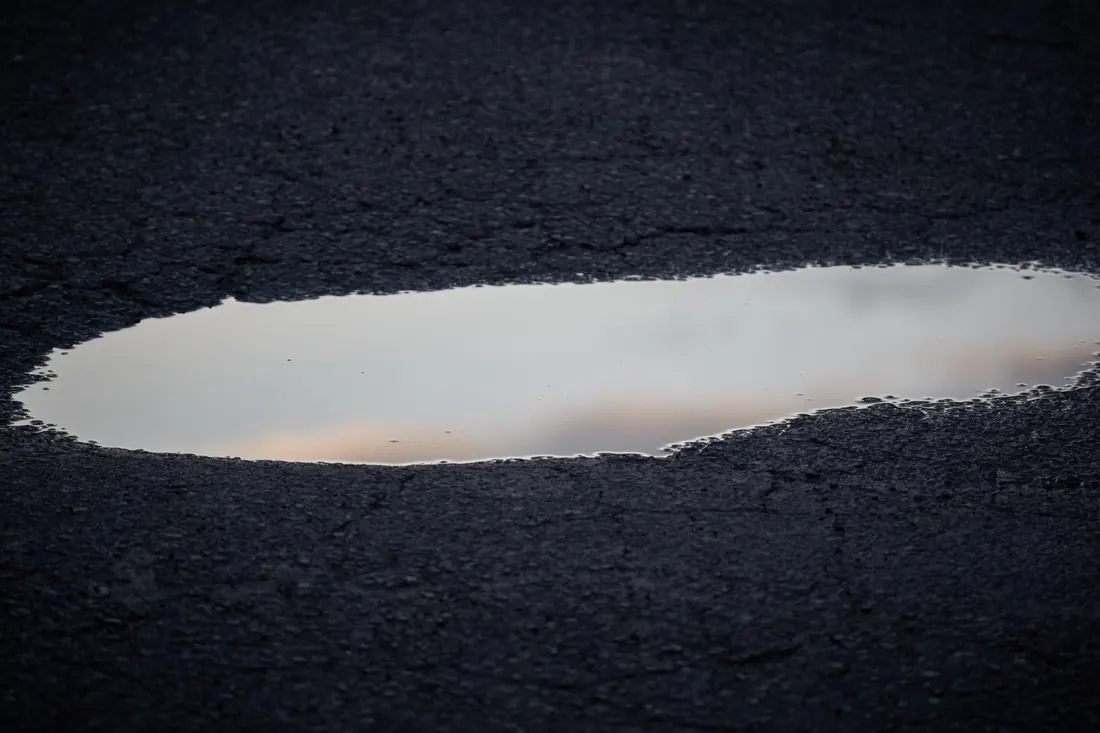
Patch, Level, Drain, or Repave?
Drainage problems do not all need the same repair. Some low areas can be corrected with localized asphalt repair or leveling. Some need drain adjustment, concrete gutter work, milling, full-depth repair, or larger paving. Some cannot be fully corrected without changing fixed elevations around curbs, doors, walks, ramps, or structures.
Before choosing a repair, separate the symptom from the cause. A puddle is the visible symptom. The cause may be grade, settlement, trapped water, failed base, drain elevation, poor tie-ins, curb flow, or repeated patching that changed the surface profile.
What Affects Drainage Repair Cost?
Do not compare drainage repair bids until you know what is included. Square footage matters, but so do drain structures, excavation depth, asphalt thickness, base condition, milling, concrete work, curb and gutter conditions, traffic control, phasing, disposal, utility conflicts, accessible routes, tenant access, and whether the scope is only treating the visible puddle.
Before approving a drainage proposal, review Drainage Problems That Destroy Asphalt, the Pavement Assessment Guide, the Three-Bid Decoder, and How to Read a Pavement Bid.
ADA, Concrete, and Paving Considerations
Drainage affects more than pavement life. Water can cross accessible stalls, access aisles, ramps, sidewalks, tenant paths, entries, curb returns, and concrete transitions. Paint does not fix slope, and fresh asphalt does not automatically fix drainage.
Surface Intelligence ADA content is educational risk-screening, not a CASp inspection, legal opinion, engineering report, or formal compliance certification. If formal accessibility verification is needed, involve a qualified accessibility professional. Ryan can help coordinate the paving, concrete, drainage, striping, and documentation side of the work.
- Accessible stall and access aisle drainage
- Water crossing curb ramps or pedestrian routes
- Concrete gutters, drain aprons, and sidewalk transitions
- Asphalt overlay changing finished slopes
- Drain elevations near ADA parking or entrances
- Striping layout after drainage or paving work
- Tenant, resident, and customer access during repair
- Documentation before owner or board approval
Our Drainage Scope Review Process
A useful drainage review should explain the water path before anyone assumes the answer is patching, overlay, drain work, concrete, or full paving.
- Photo and property review
Ryan reviews rain photos, dry-weather photos, drain locations, known failures, property use, access needs, and any current bids. - Visible water path screening
The review separates where water collects, where it appears to come from, and where the property needs it to go. - Failure pattern review
Potholes, cracking, raveling, patches, edges, low areas, curbs, concrete, and drain structures are checked for drainage-related clues. - Scope option discussion
The likely path may be patching, leveling, drain adjustment, concrete work, milling, overlay, replacement, or a phased plan. - Proposal support
The proposal should clarify what is included, what is excluded, who owns drain or concrete work, and what risk remains open. - Construction and closeout notes
The property file should include before photos, repair limits, drainage assumptions, and closeout notes for future maintenance decisions.
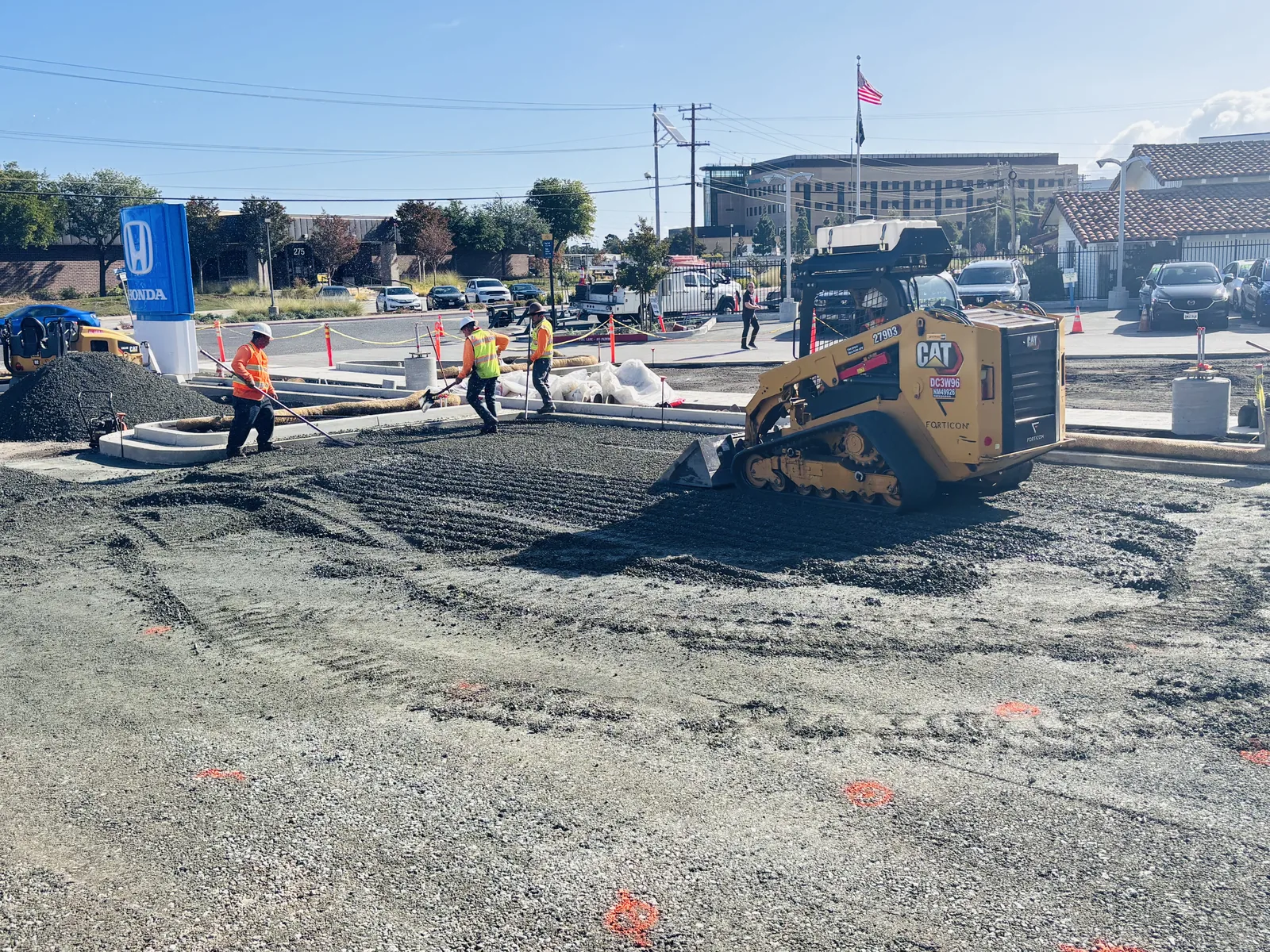
What We Look at Before Recommending Drainage Work
A responsible drainage recommendation starts with the whole water path, not just the puddle. The visible condition tells you whether the conversation is asphalt, drain adjustment, concrete, grading, ADA review, or a broader paving scope.
- Where water stands after rain
- Where runoff appears to enter the area
- Drain inlet condition and elevation
- Surrounding asphalt cracking, raveling, and potholes
- Base movement or repeated patch failure
- Curbs, gutters, concrete aprons, and valley sections
- Doorways, ramps, sidewalks, and accessible routes
- Traffic loading near drains, dock areas, and trash routes
- Overlay tie-ins, curb reveal, and fixed elevations
- Tenant, resident, delivery, and emergency access constraints
Common Drainage Mistakes Property Managers Should Avoid
- Patching the same wet failure without finding the water path
- Sealcoating over ponding or active drainage damage
- Overlaying without checking drain elevations and tie-ins
- Ignoring water through accessible parking or pedestrian routes
- Assuming every low spot can be fixed with asphalt alone
- Not documenting rain conditions before requesting bids
- Letting bids stay vague about drains, concrete, and grading
- Ignoring curb, gutter, and landscape runoff
- Approving striping before drainage and ADA areas are reviewed
- Comparing price before comparing drainage assumptions
Drainage Repair for HOAs, Commercial Lots, and Facilities
Example Field Scenarios
Bay Area and Northern California Drainage Scope Help
Surface Intelligence helps commercial properties, HOAs, facilities, and property owners think through parking lot drainage repair across the Bay Area and Northern California. That can include Oakland, Alameda, Berkeley, Richmond, Concord, Walnut Creek, Pleasanton, San Leandro, Hayward, Fremont, San Jose, and Sacramento-area commercial properties where the project fit makes sense.
The location matters, but the main question is still field condition: is the scope changing how water moves, or only repairing the asphalt damage water left behind?
Related Drainage and Pavement Resources
Parking Lot Drainage Repair FAQs
Can asphalt fix parking lot drainage?
Sometimes. Asphalt can improve grades and direct water, but drains, curbs, concrete, existing elevations, doorways, and accessible routes may limit what can be corrected with asphalt alone.
Why does the same pothole keep coming back?
Recurring failure often means water, base movement, poor compaction, drain settlement, edge failure, or another active condition remains under or near the patch.
When should drainage be reviewed?
Drainage should be reviewed before patching, sealcoating, overlay, mill-and-fill, restriping, ADA parking work, concrete work, or major paving when water sits after rain or damage keeps returning.
What should I send Ryan before approving drainage repair?
Send photos after rain, dry-weather photos of the same area, drain locations, low spots, nearby cracking or potholes, accessible stalls or routes, curbs, entrances, property address, and any bids already received.
Does sealcoating fix drainage problems?
No. Sealcoating does not correct slope, low areas, settled drains, ponding, water paths, or base failure caused by water.
Can drainage problems affect ADA parking?
Yes. Water crossing accessible stalls, access aisles, curb ramps, or pedestrian routes can create risk beyond pavement life. Surface Intelligence ADA content is educational risk-screening, not a CASp inspection or legal opinion.
Before you patch the wet spot, make sure the scope explains the water path.
Send Ryan the property address, photos after rain, dry-weather photos of the same area, drain locations, low spots, nearby pavement failure, access concerns, timing, and any bids you already have.