
Commercial Sealcoating for Parking Lots, HOAs, and Managed Properties
Sealcoating can protect asphalt and extend pavement life when the lot is still a good candidate. Used too late, it becomes an expensive coat of black paint over a failing pavement problem.
When Sealcoating Is the Right Solution
Parking lot sealcoating may be appropriate when asphalt is oxidized but still structurally sound. The surface may be dry, gray, lightly raveled, and ready for preventive maintenance, but the pavement should not be breaking apart underneath the coating.
Commercial sealcoating works best when cracks have been properly cleaned and sealed first, drainage is acceptable, there is no widespread alligator cracking, and the owner or board wants to extend useful life before major paving becomes necessary.
- Asphalt is oxidized but still stable
- Surface is dry, gray, or lightly raveled
- Cracks can be cleaned and sealed first
- Drainage is acceptable
- No widespread alligator cracking is present
- The lot needs preventive maintenance, not structural repair
- The owner wants to extend useful life before major paving
- Striping is due and the lot would benefit from a maintenance reset
When Sealcoating Is a Waste of Money
This is where a lot of bad maintenance spending starts. Sealcoating is usually the wrong scope when the pavement has base failure, active potholes, standing water in failed areas, moving pavement, pumping, broken edges, failed patches, or drainage problems that have not been corrected.
Black pavement does not mean healthy pavement. Sealcoat can make a failing lot look cleaner for a short time while the real problem keeps moving below the surface.
- Cracks have connected into alligator cracking
- Potholes are active or returning after patching
- Water is standing in failed areas
- Pavement is moving, pumping, or breaking apart
- Prior patches are failing
- Drainage is the real problem
- The lot needs removal and replacement
- Sealcoat is being used to make a bad lot look better for a short time
Read When Sealcoat Is a Waste of Money before approving a cosmetic fix for pavement that needs repair, drainage correction, or paving.
Sealcoating vs Crack Sealing
Crack sealing and sealcoating are related, but they do different jobs. Crack sealing addresses open cracks before water enters the pavement structure. Sealcoating protects the asphalt surface from oxidation, weather, and wear.
Sealcoat should not be used to fill structural cracks. If cracks are ignored, sealcoat alone will not stop water intrusion. On many commercial parking lot sealcoating projects, crack sealing needs to happen first.
What Affects Sealcoating Cost?
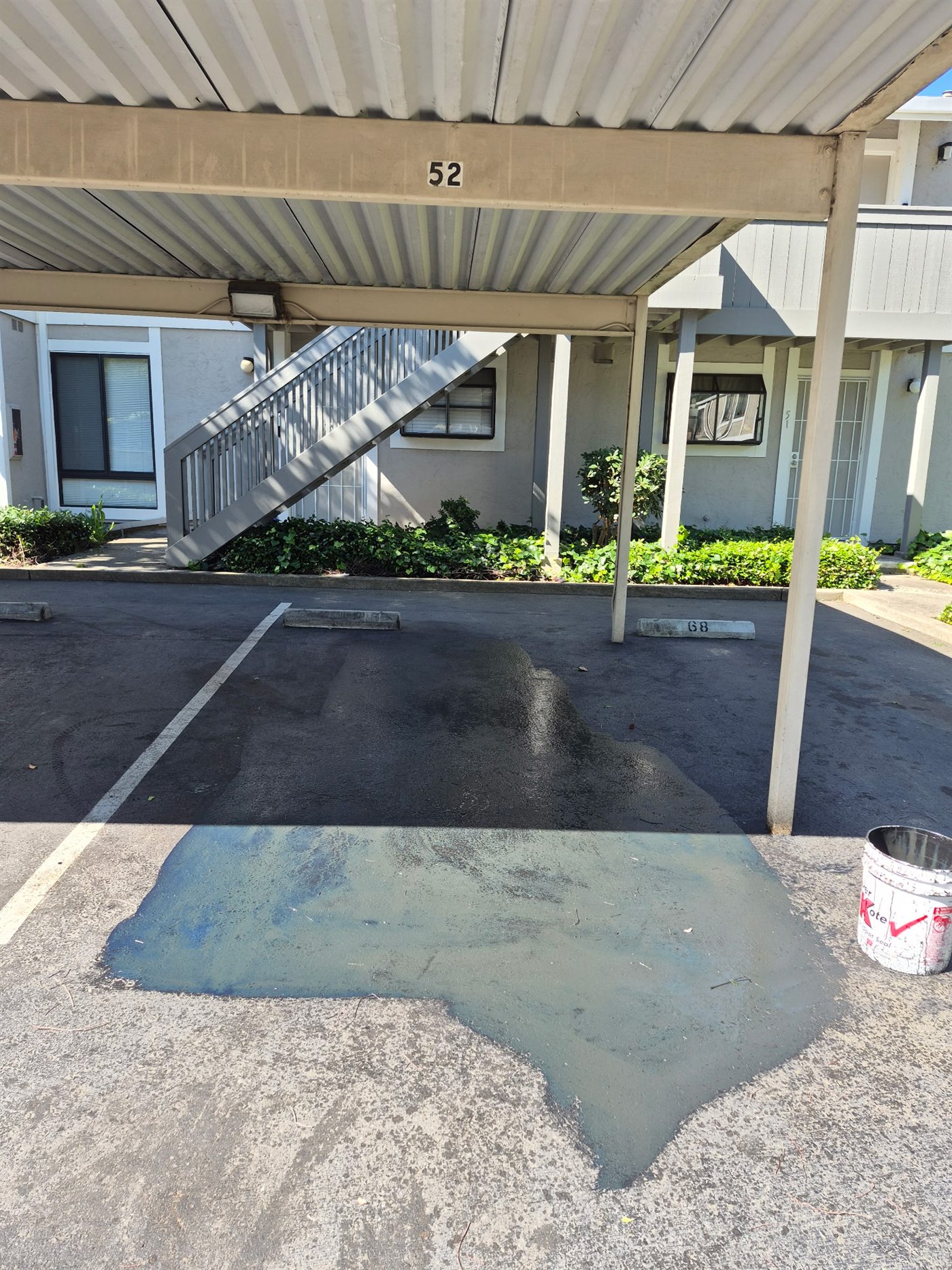
Do not trust a sealcoat cost until you know what is included. Square footage matters, but so do pavement condition, number of coats, crack sealing, cleaning, oil spots, surface contamination, traffic control, phasing, mobilizations, striping layout, ADA markings, weekend or after-hours work, tenant or resident access, sand or additives, and heavy-wear areas.
Before comparing sealcoating bids, review How to Read a Pavement Bid, the Parking Lot Maintenance Guide, the Three-Bid Decoder, and the Sealcoat Timing Calculator.
Our Sealcoating Process
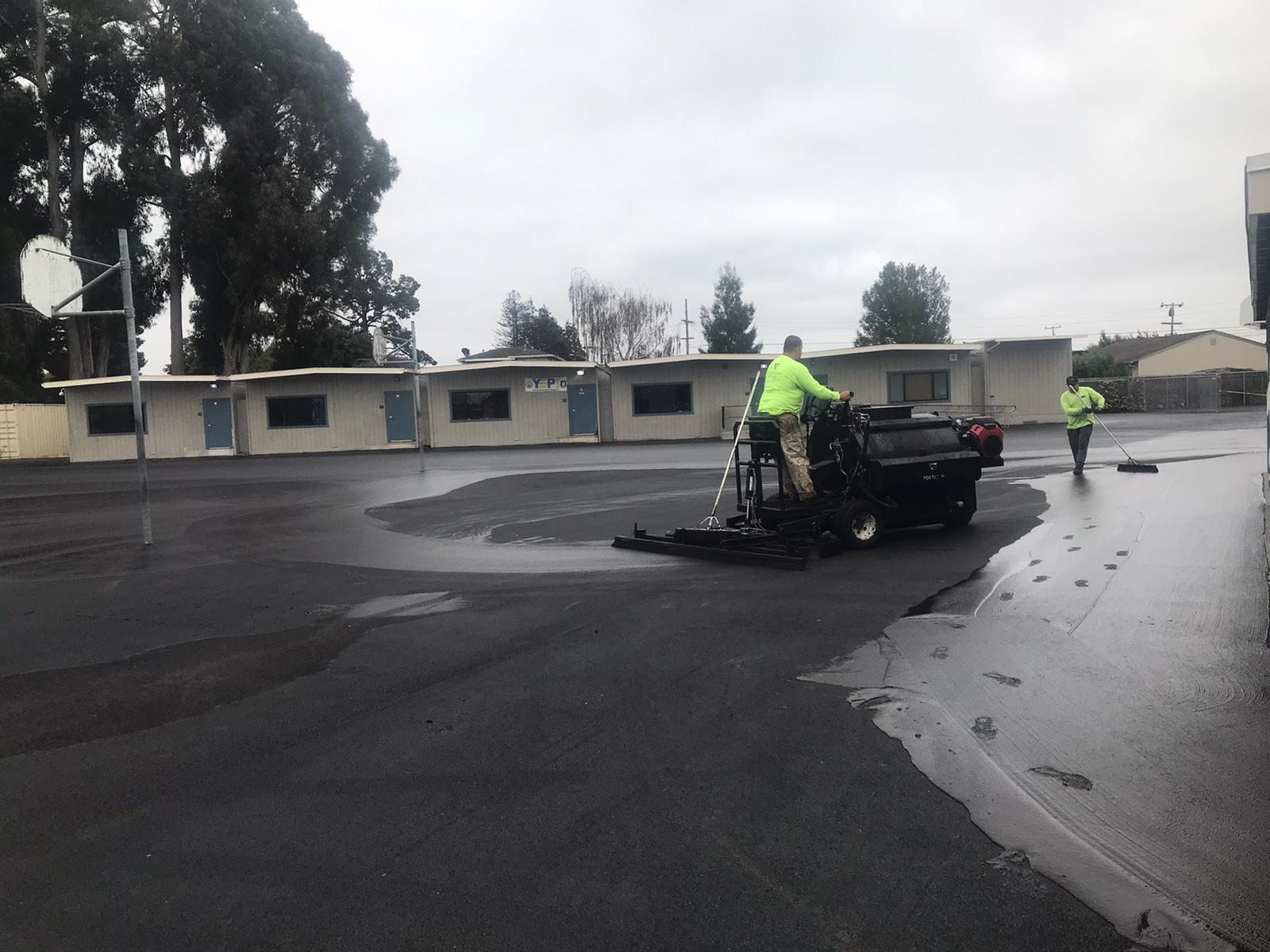
The process can vary by site condition, weather, traffic, coating system, and phasing needs, but a useful commercial parking lot sealcoating scope should make the sequence clear before work starts.
- Initial pavement review
Ryan reviews the lot condition, photos, known failures, timing, access needs, and any bids already in hand. - Cleaning and surface preparation
The scope should address sweeping, blowing, vegetation, debris, and surface preparation before coating. - Crack sealing where included
Appropriate cracks are identified, cleaned, and sealed before the coating stage. - Oil spot treatment where needed
Contaminated areas are reviewed so coating is not applied over conditions likely to fail early. - First coat application
The first coat is applied based on the specified material, method, site conditions, and traffic plan. - Second coat application when specified
A second coat may be included depending on the scope, owner goal, traffic, and product requirements. - Drying and access coordination
Closures, phasing, resident or tenant access, trash service, and reopening timing are managed before the lot is returned to traffic. - Restriping
Stalls, arrows, fire lanes, ADA markings, access aisles, curb paint, and other markings are refreshed after curing. - Final walkthrough and maintenance notes
The property file should show what was completed, what was excluded, and what to monitor next.
What We Look at Before Recommending Sealcoat
A responsible sealcoating contractor should not recommend the same scope for every property. The field conditions decide whether the lot belongs in asphalt preservation, repair, drainage correction, paving, striping, or a phased maintenance plan.
- Pavement age and maintenance history
- Oxidation level and surface raveling
- Crack width, pattern, and movement
- Alligator cracking and failed patches
- Potholes, soft areas, and broken edges
- Drainage patterns and standing water
- Oil spots and surface contamination
- Traffic volume and garbage truck routes
- Shaded areas and cure constraints
- Tenant or resident access needs
- Striping condition and ADA stall layout
- Prior sealcoat buildup and weather window
Common Sealcoating Mistakes Property Managers Should Avoid
- Sealcoating over structural failure
- Skipping crack sealing before sealcoat
- Choosing the lowest bid without comparing prep
- Ignoring drainage problems
- Sealcoating too late in the pavement lifecycle
- Failing to plan tenant or resident access
- Not coordinating striping correctly
- Not reviewing ADA markings before restriping
- Accepting vague material descriptions
- Not documenting pavement condition before work
Sealcoating, Striping, and ADA Considerations
Sealcoating often leads directly into parking lot restriping. That means ADA stall markings, access aisles, "NO PARKING" markings, blue borders where applicable, directional arrows, fire lane markings, curb paint, stall dimensions, signage coordination, and slope concerns should be reviewed before layout is painted back onto the lot.
Paint does not fix slope. If ADA slopes or access aisles are already non-compliant, sealcoating and restriping may make the issue more visible but will not correct the underlying grade problem. Review the ADA Parking Requirements guide before treating restriping as a simple repaint.
Sealcoating for HOAs, Commercial Lots, and Facilities
How Often Should a Parking Lot Be Sealcoated?
Timing depends on traffic, sun exposure, drainage, pavement condition, product, prior maintenance, and how the site is used. Many commercial lots are reviewed every few years, but the review should be based on condition, not a calendar alone.
Sealcoating too often can create buildup and does not solve deeper problems. The better question is whether the pavement is still a good candidate.
Example Field Scenarios
Bay Area and Northern California Sealcoating Scope Help
Surface Intelligence helps commercial properties, HOAs, facilities, and property owners think through Bay Area sealcoating and Northern California asphalt maintenance decisions. That can include Oakland, Alameda, Berkeley, Richmond, Concord, Walnut Creek, Pleasanton, San Leandro, Hayward, Fremont, San Jose, and Sacramento-area commercial properties where the project fit makes sense.
The location matters, but the main question is still condition: is the pavement worth preserving, or is sealcoat being asked to hide a repair or paving problem?
Related Asphalt Maintenance Resources
Commercial Sealcoating FAQs
How do I know if my parking lot is a good candidate for sealcoating?
A good candidate is oxidized or lightly worn asphalt that is still structurally sound. If the lot has alligator cracking, potholes, failed patches, movement, or drainage problems, start with repair or paving scope review.
Does sealcoating fix cracks?
No. Sealcoat protects the surface. Open cracks should be evaluated and usually sealed before coating, while structural cracking may require repair.
Should cracks be sealed before sealcoating?
Usually yes. Crack sealing helps reduce water intrusion before the coating is applied. Ignoring cracks and coating over them leaves the pavement vulnerable.
How long does commercial sealcoating take?
Timing depends on lot size, preparation, crack sealing, number of coats, drying time, striping, weather, traffic control, and phasing.
How long before cars can drive on a sealcoated parking lot?
Reopening depends on the product, weather, sun exposure, humidity, shade, application rate, and site needs. The access plan should be set before work begins.
Is one coat or two coats better?
It depends on condition, traffic, product, and maintenance goals. More material is not a substitute for repair if the pavement is failing structurally.
Can sealcoating fix alligator cracking?
No. Alligator cracking usually points to structural distress or base movement. Sealcoat can darken the pattern, but it cannot rebuild support under the asphalt.
Does sealcoating fix drainage problems?
No. Sealcoating does not correct slope, standing water, failed drains, low spots, or water moving through damaged pavement.
Should ADA striping be reviewed before restriping?
Yes. Stall layout, access aisles, markings, signs, routes, and slopes should be reviewed before paint goes back down. Paint does not fix slope.
Why are sealcoating bids so different?
Sealcoating bids can differ because of preparation, crack sealing, cleaning, oil spot treatment, coats, material quantity, sand or additives, traffic control, phasing, striping, and exclusions.
Before you sealcoat, make sure the pavement is still worth preserving.
Send Ryan the property address, photos, timing, and any sealcoating bids you already have. The goal is to find out if sealcoat makes sense before you spend money on the wrong maintenance scope.